This tour is designed for the guests who have less time to explore the country. It covers 3 private tours to vary destinations of the country which lets you to discover the country from different sides. With just a few days to spend in Baku, this tour will ensure you maximise your time and take in as many of Azerbaijan’s highlights as possible. Discover the UNESCO-listed Old Town and contemporary landmarks of Baku, admire the ancient rock art of Gobustan National Park, see natural wonders including the Burning Mountain and the Mud Volcanoes, and visit the Fire Temple of Baku and visit the green and mountainous areas of Gabala City.
Locals love to do shopping in fancy and glamorous brand shops, have dinner in fast food or local/international cuisine restaurant located in Nizami street, finally just walk. And during this walking time take photos. There are quite a lot things that can attract everyone. The most common name of Nizami street among locals is Torgovaya, which means Trade in Russian. The street was named as this during Russian Empire time. The service in the shops and restaurants in this street is higher than in other parts of Baku as well.
ve includes the Shirvanshah Palace, Synyk kala minaret, Maiden Tower, Medieval Market Square, Icheri Sheher Archaeological Museum, Seyid Yahya Bakuvi mausoleum, caravanserais, Mollahana, numerous mosques, madrassahs, bath-houses, Baku Khans’ House, also numerous rich residences of the ХIХ century. Note: The entrance to the Old city is free, but there some museums which require a fee to enter there like Maiden tower and Shirvanshah's palace.
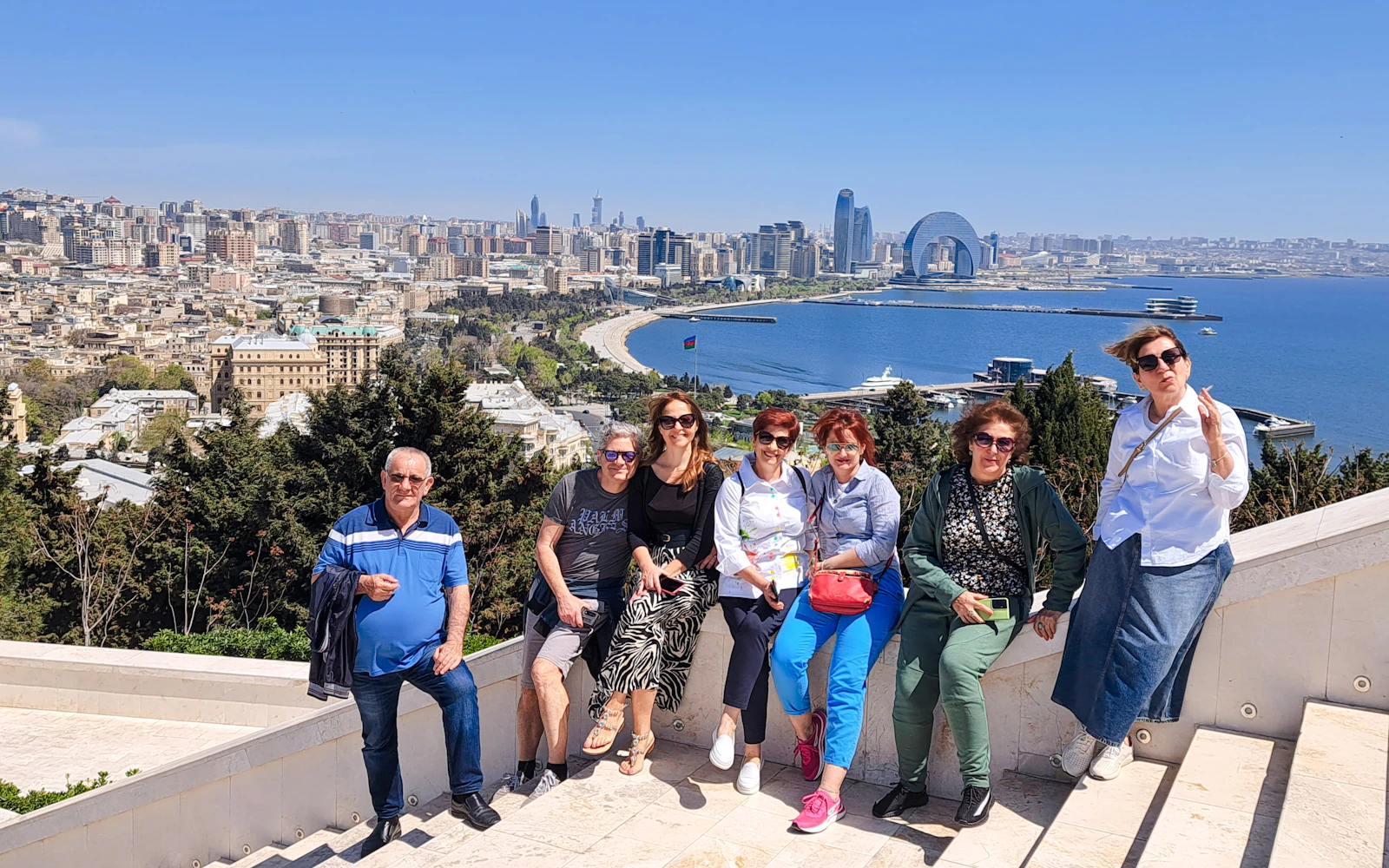
ku Boulevard, where we will get close to Caspian sea. The Boulevard along the Caspian is a beautiful, several kilometer long parkway that is a real gem of the city. Baku Boulevard (also known as National Park) is a promenade established in 1909 which runs parallel to Baku's seafront. Its history goes back more than 100 years, to a time when Baku oil barons built their mansions along the Caspian shore and when the seafront was artificially built up inch by inch. The park is about 3 km and 750 m in size and located in south coast of the Caspian Sea. It starts at the National Flag Square and ends at Freedom Square. According to the Azerbaijan Cabinet of Ministers, the boulevard's size is expected to reach 26 km, which will cover areas including Bibiheybat and Bay of Baku by 2015. The project on expansion of the Baku boulevard aims at creating more comfortable conditions for the residents of the capital city and the guests to have a rest and take sports in more comfortable conditions at the Caspian seashore. Before the Eurovision Song Contest 2012 the boulevard was extended to the National Flag Square.
4 museum building is itself designed like a stylised roll of carpet.
terest on Baku Boulevard
rms contemporary Baku’s architectural signature. The design was conceived as a set of flames, driven from the ground up one of the main hills of Baku. Fire symbolizes energy and eternity, and also goes back to the ancient worship of this element.
The city's residents and visitors often come here to see a bird's eye view of Baku, and just have a walk.
The Center houses a conference hall (auditorium), a gallery hall and a museum. The project is intended to play an integral role in the intellectual life of the city. Located close to the city center, the site plays a pivotal role in the redevelopment of Baku.
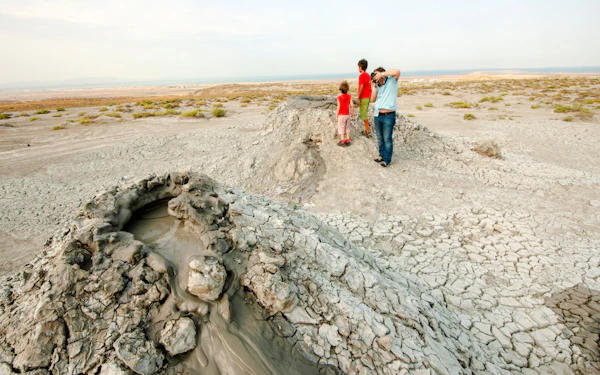
Home to nearly a third of the world's mud volcanoes, Azerbaijan features a messy, bubbling, and sometimes explosive landscape. Mud volcanoes are closely associated with hydrocarbon and petrochemical stores underground, hence the gas trying to escape to the surface. A few of these gas leaks are constantly on fire, shooting small perpetual flames into the air and some believe that these perpetual flames are strongly connected to the appearance of the Zoroastrian religion in Azerbaijan some 2,000 years ago. Every 20 years or so, one of these mud/gas volcanoes will ignite deep below the surface and create a massive explosion. While generally not dangerous to people, as they are far outside of most city centers, it is believed that six shepherds and over 2,000 sheep were killed by a mud volcano in Bozdagh, Azerbaijan.
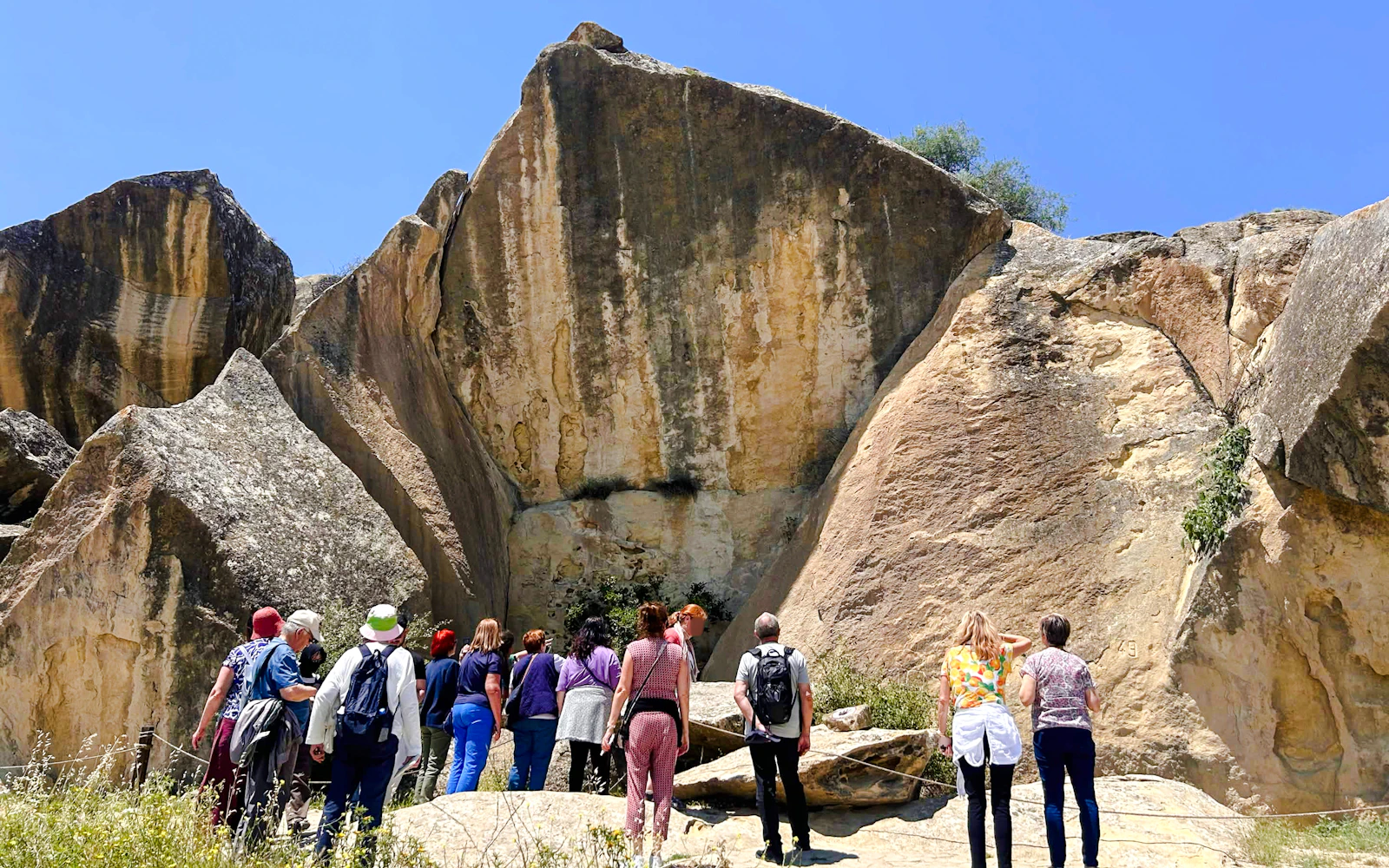
ter spending some time there, we go to the Gobustan Rock Art (open air museum). Gobustan State Reserve located west of the settlement of Gobustan, about 40 miles southwest of the centre of Baku was established in 1966 when the region was declared as a national historical landmark of Azerbaijan in an attempt to preserve the ancient carvings, mud volcanoes and gas-stones in the region. Gobustan State Reserve is very rich in archeological monuments, the reserve has more than 6,000 rock carvings, which depict primitive people, animals, battle-pieces, ritual dances, bullfights, boats with armed oarsmen, warriors with lances in their hands, camel caravans, pictures of sun and stars, on the average dating back to 5,000-20,000 years.
where we will stop for a while
r guest will discover the natural fire burning steadily. Yanar Dag (Azerbaijani: Yanar Dağ, meaning "burning mountain") is a natural gas fire which blazes continuously on a hillside on the Absheron Peninsula on the Caspian Sea near Baku. Unlike mud volcanoes, the Yanar Dag flame burns fairly steadily, as it involves a steady seep of gas from the subsurface. It is claimed that the Yanar Dag flame was only noted when accidentally lit by a shepherd in the 1950s.
called the "Fire Temple of Baku" is a castle-like religious temple in Surakhani town, a suburb in Baku, Azerbaijan. Based on Persian inscriptions, the temple was used as a Hindu, Sikh, and Zoroastrian place of worship. "Atash" (آتش) is the Persian word for fire. The pentagonal complex, which has a courtyard surrounded by cells for monks and a tetrapillar-altar in the middle, was built during the 17th and 18th centuries. It was abandoned in the late 19th century, probably due to the dwindling of the Indian population in the area. The natural eternal flame went out in 1969, after nearly a century of exploitation of petroleum and gas in the area, but is now lit by gas piped from the nearby city.
day Mosque of Shamakhi (Azerbaijani: Şamaxı Cümə Məscidi), a mosque in the city of Shamakhi, Azerbaijan. Construction date of the mosque- 743-744 relies on research of a geological commission coming from Tiflis, which was led by Prince Shahgulu Qajar. This date was defined with Arabic ligature on the facade of the Friday Mosque, stating the year 126 according to the Islamic calendar as the establishment year.[1] Just in this period, the construction of new religious buildings – mosques – was begun in the territory of Azerbaijan. The historical appearance of ancient Islamic architectural monuments was related to the Arabs’ governance and the spread of Islam in the territory of Azerbaijan. Friday Mosque of Shamakhi is considered the first mosque in the Caucasus after Cathedral Friday Mosque of Derbent, which was constructed in 734.
ir and water is one of the most picturesque places of Gabala. The visitors are amazed by the beauty of Lake Nohur. The quiet atmosphere and bird sounds create an ideal relaxation environment to escape from the noise of the city. Although swimming in the lake is prohibited (the lake is also used as a reservoir and provides drinking water for Gabala and surrounding regions), it is a perfect place for fishing. You can also take a boat and catamaran ride and enjoy the surrounding landscape.
ing, or just for memorable summer views of the Alpine scenery behind Gabala, jump aboard the Tufandag network of four cable cars. Note: Entrance to the complex is free, but the cable car cost per person: 14 AZN (includes 2 stops) and 24 AZN (includes full stop)
As this is a private tour, we pick up all travelers from the hotel/accommodation where they stay.
For a full refund, cancel at least 24 hours before the scheduled departure time.
Browse Baku by category - skip-the-line tickets, walking tours, day trips, food experiences & more