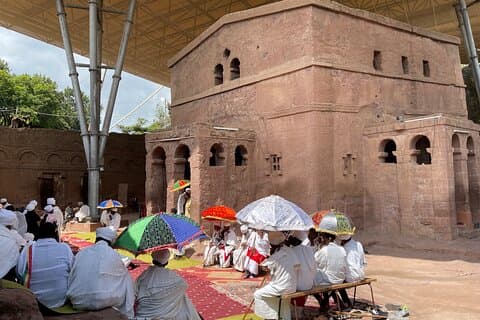
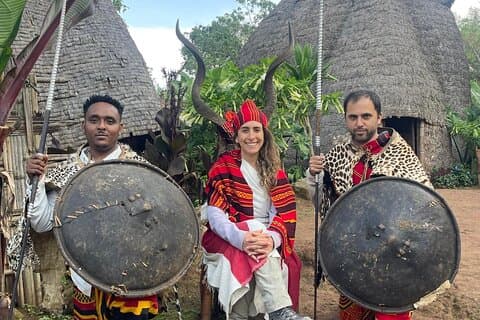
Take a seven-day tour of the Omo Valley in Ethiopia to learn about its history, culture, and natural wonders. After a hassle-free hotel pickup, embark on an adventure that covers it all: Addis Abeba's top attractions, Lake Chamo's wildlife, Dorze village's beehive-shaped huts, Mago National Park's Mursi village, Konso village's UNSCO heritage site, and more. On this once in a lifetime journey, indulge in delectable complimentary meals, six nights of lodging, the services of an educational local guide, and comfortable vehicles. Omo Valley Tours offers unique local-led tribal and ethnic visits, exclusively exploring the Omo region in the south of Ethiopia. We will assist you in discovering the most ethnically diverse cultures, customs, and ceremonial events, including the most isolated areas of the Omo Valley.
It contains many precious local archaeological finds such as the fossilized remains of early hominids, the most famous of which is "Lucy," the partial skeleton of a specimen of Australopithecus afarensis.
The peak is the highest on this mountain and overlooks the capital city. Legend has it that it is from here that Emperor Menelik II and his wife Empress Taitu saw Addis Ababa for the first time and decided to make it the capital of the country. The mountain offers a fantastic view of the capital city nestled in its foothills.
George Orthodox cathedral is notable for its unique octagonal structure. Designed by Sebastiano Castagna and constructed by Italian prisoners of war who were defeated at Adwa in 1896, it was given the name St. George since the church's ark was brought to the battle of Adwa, where the Ethiopians prevailed over the Italians. The cathedral was destroyed by the Italian Fascist authorities in 1937, but the Emperor rebuilt it once the building was freed in 1941.
Spread out across many square miles, Mercato is home to over 7,000 enterprises and an estimated 15,000 people, making it the biggest open-air market in Africa. Coffee, building materials, clothes, vegetables, spiacess and other locally grown agricultural items make up the bulk of the Mercato's merchandise, but there is also a fascinating and colorful re-cycle market that you may explore on foot with a guide.
Begin at the scenic viewpoint to enjoy splendid views of the lush greenery and the vibrant waters, while a guide shares insights about the springs' importance and local legends. Stroll along the shaded pathways, take in the refreshing ambiance, and marvel at the unique flora and fauna. This brief excursion offers a delightful escape into nature, perfect for those seeking a quick yet enriching experience.
ts of the great Omotic language group of southern Ethiopia. Once warriors, they have now turned to farming and weaving to earn a living. Their success in the field of weaving has been phenomenal and the Dorze name is synonymous with the best in woven cotton cloth. Each amazing Dorze bamboo house has its own small garden surrounded by enset (false banana plantation), beds of spices and cabbage, and tobacco (the Dorze are passionate smokers). The main house is a tall up to twelve meters bee-hived shaped building with an aristocratic ‘nose’, which forms a reception room for guests and is usually furnished with two benches. The vaulted ceiling and walls of the spacious and airy houses are covered with an elegant thatch of enset to form a smooth and steep unbroken dome
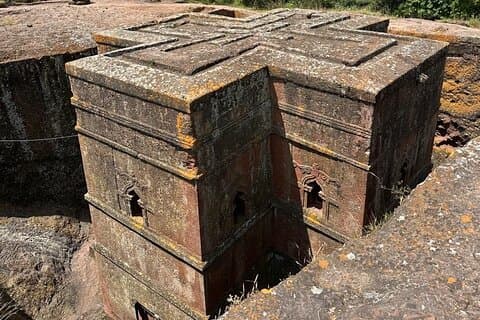
Konso is known for its stone wall villages and Cultural landscape particularly recognized for their communal sustainable work of terrace system registered by UNESCO
The Hamer are a renowned Tribe of Omo Valley, particularly for their Women’s Striking hairstyles, and having the friendliest Tribe in Omo Valley, Ethiopia.
ing ethnic group residing in Ethiopia and Kenya. They have traditionally inhabited the southern region of the Omo Valley, specifically the Omorate District, which is in close proximity to the border between Ethiopia and Kenya. The population of the Dassanech community currently stands at 47,440 individuals.
ir way of life, housing, music, coffee, and more; if it is Saturday, market day, you will also visit Dimeka.
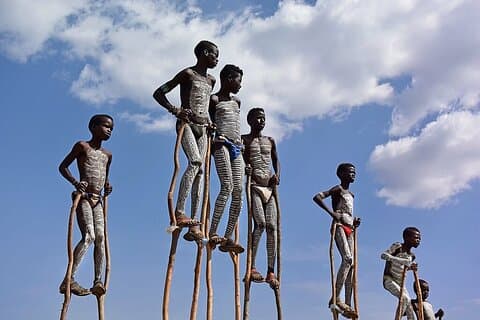
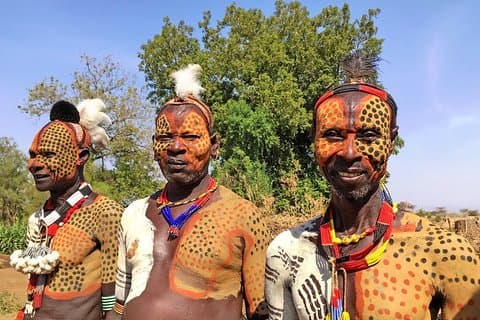
arification, and body painting as forms of self-expression and cultural value in their ceremonies, which are steeped in rich cultural symbolism. In the southern Ethiopian region known as the Lower Omo Valley, there is a vibrant agriculturalist tribe that numbers fewer than a thousand people. Their environment may be lacking in advanced materials and natural resources, but it doesn't stop them from wanting to express themselves artistically and symbolically in unique ways
One of Ethiopia's more unusual ethnic groupings is the Mursi. Their dwellings are composed of straw leaves and are quite low. The women like to adorn their earlobes and dramatically expanded lower lips with terracotta.
Women who wear skirts made from Enset, a tree resembling a banana, are pottery experts.
Attend a folkloric supper in the evening to witness the dances of Ethiopia's numerous ethnic groups and to sample a variety of traditional dishes. There will also be the customary coffee ceremony. You will be taken to the airport later to make your departure.
Our guide will wait for you at the airport with the sign of your name
For a full refund, cancel at least 24 hours before the scheduled departure time.
Browse Addis Ababa by category - skip-the-line tickets, walking tours, day trips, food experiences & more