Visit highlights of China including the Shanghai, Xi'an and Beijing with this 7 day private tour from Shanghai. You will be picked up from your Shanghai hotel and dropped off at Beijing.
You will be escorted to the well-known Urban Planning Exhibition Hall in around 20 minutes ride.
nd architectural models, which will help you get an overall understanding of the development of Shanghai. The Urban Planning Exhibition Hall showcases the urbanization and modernization of Shanghai. You will know more about Shanghai's past and present by viewing the miniatures of the city, and rich materials about the city planning. Also, the high-tech methods are widely adopted to forecast the blueprint of Shanghai through 2020.
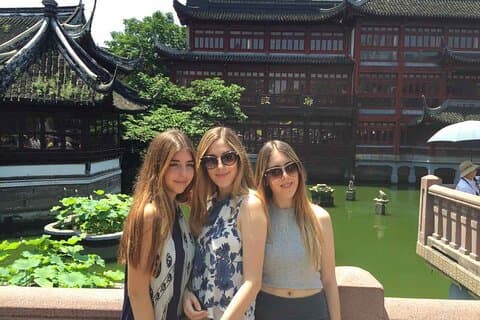
ed in the old town, Yuyuan Garden is the most famous ancient site in this city for its ingenious layout and delicate architecture. The treasure of the garden, Yu Ling Long (an exquisite jade stone), an artificial hill, is considered as one of the three most well-known peaks in Southern China.
rden, in the heart of Old Shanghai City, and close to the Old City God Temple. There are many traditional Chinese buildings, which nowadays are used as commercial stores to sell local products, snacks, jewelry, souvenirs, antiques and so on.
It is the world's 8th tallest building, and the 4th tallest structure in Mainland China. The 100th floor has a viewing gallery that is 55 meters long. It is the second highest observation deck in China. It is higher than the viewing platforms on the Canadian TV Tower (447 meters) and the Dubai Tower (440 meters).
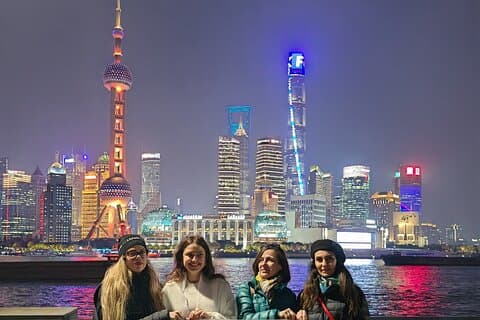
Located on the bank of Huangpu River, travelers come to the Bund not only for the charming riverside scenery, but the unique western and gothic architectures also deserve a look. We will set aside some free time for you to stroll around the Bund and take some photos.
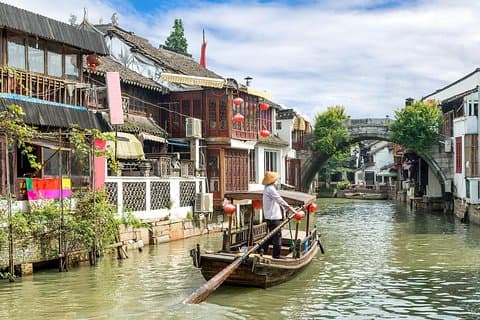
You will be escorted to the well-known Zhujiajiao water town in around 60 minutes ride.
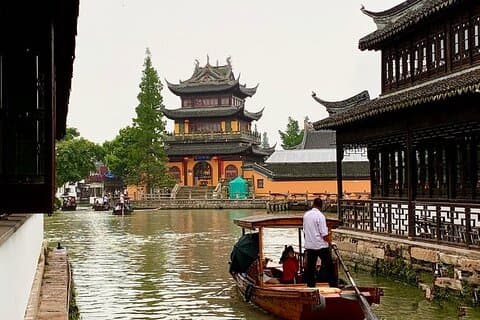
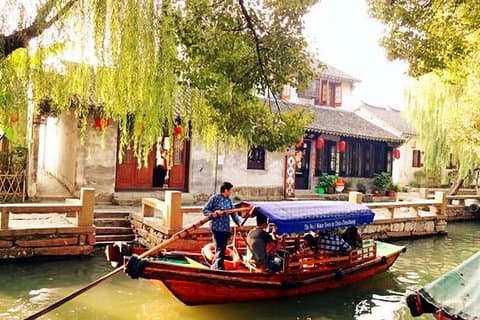
y of more than 1,700 years, being regarded as Shanghai's Venice, glimmers like a bright pearl in the landscape of lakes and mountains. The three places in the water town deserve your visit: Kezhi Garden, Qing Dynasty Post Office and Fangsheng Bridge. Your tour guide will accompany you to visit these. Kezhi Garden was built in 1912 and contains various pavilions and buildings, lotus pond, stele corridors, bridge of nine turnings and different kinds of plants. You can see the calligraphy inscription of the literati in Ming Dynasty (1368 - 1644 AD) with high value of art in the stele corridor. In Qing Dynasty Post Office, you can see the precious old postcard and letters in Qing Dynasty (1644 - 1911 AD) and there is a post box with a carved dragon on it which is still in use today. Fangsheng Bridge, built in Ming Dynasty, is the largest and longest stone arch bridge in Shanghai with five arches.
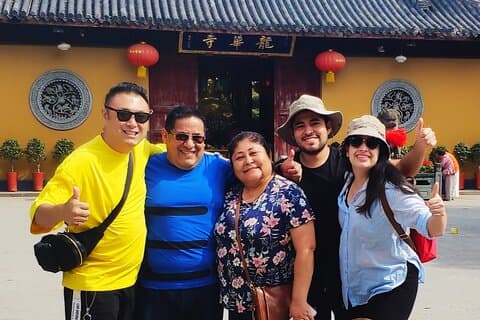
Built in 1882 for the two white jade Buddha statues from Burma, the Jade Buddha Temple is a famous Buddhist shrine and an active Zen monastery. The temple plays an important role in disseminating Buddhism through cultural means, including lectures and library service, Buddhist academic publishes as well as regular Buddhist cultural activities.
stinctive Shikumen buildings with art studios, themed cafés and bars, and handicraft workshops.
'an is waiting for you(Ho1235 21:05-23:45). The flight takes around 2.5 hours.
then transfer to Terracotta Warriors Museum, need 80 minutes driving,45km.
Following your guide, you will explore the Terracotta Warriors Museum by visiting the three excavated pits, as well as the Bronze Chariots and Horses Exhibition Hall. Although the clay warriors and horses have been buried for more than 2,200 years, they are still vivid with distinct appearances. You will spend at least two and a half hours to see this amazing site.
u Temple, about one kilometer south of Xi'an city proper. It is one of the two famous and important Buddhist pagodas erected in the Tang Dynasty about 1300 years ago. Small Wild Goose Pagoda and its large neighbor, Big Wild Goose Pagoda, are two important Buddhist sites, dating back to the Tang Dynasty, 1300 years ago. The two pagodas were a symbol of Chang'an (Constant Peace) city. Xi'an (West Peace) was called Chang'an until the Ming Dynasty (1368-1644), when Beijing became the capital of China. Chang'an had served as the capital for ten dynasties.
You can walking or cycling around the wall, the bike fees you pay locally if you do that. The first landmark visitors will encounter in Xian is the ancient City Wall, which stretches round the old city. It is also one of the most famous attractions in Xian. Today, this wall represents one of the oldest and best preserved Chinese city walls, as well being one of the largest ancient military defensive systems in the world.
If you are interested, you can explore the bazaar at your own pace and then return to the hotel by yourself. Your guide will give you directions for returning to your hotel. The Great Mosque and the Bell and Drum Tower Square are within walking distance of the Bazaar. There are many boutique stores at fair prices in Bazaar and also a number of excellent choices of food for dinner.
then transfer to Hanyanglin, need 30 minutes driving,15km.
site of the Mausoleum of Western Han Emperor Liu Qi built in 153 AD. In the company of the guide, you will have a close look at the thousand-year-old tombs through the glass floors and the glass walls in the tomb pits. Besides, the advanced Spectra Vision program will reproduce the real life of the Western Han Dynasty about 2,000 years ago. We will ensure you two hours exploring the site.
Unique historical and culture heritage of Shaanxi is undoubted worth the praise as treasure house of Chinese civilization, and Shaanxi History Museum is definitely a palace of art to display Shaanxi's history and culture and China's ancient civilization. There are as many as some 370,000 antiquities collected, ranging from prehistorical relics to that of the 1840s. Time spans more than one million years and the collection is superior in value, quantity, rank and species. Your guide will provide professional full explanations.
With suggestions from our former guests, it is enough to see the pagoda and the statue of Monk Xuanzang at the south square outside the temple. As a well-preserved ancient building and a holy place for Buddhists, the pagoda built during the Tang Dynasty was once the site for Xuanzang to translate the Buddhist sutras.
ne to Beijing is waiting for you and may book the NS8032 19:00--21:25 for you. The flight takes around 2.5 hours.
1 day Forbidden City and Temple of Heaven city tour.
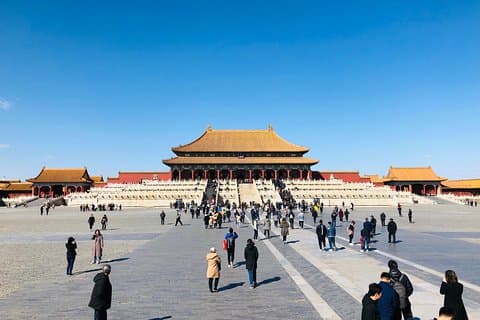
Gu Gong in Chinese, lies at the city center of Beijing, and once served as the imperial palace for 24 emperors during the Ming and Qing Dynasties (1368 - 1911). It was first built throughout 14 years during the reign of Emperor Chengzu in the Ming Dynasty (1368-1644). Ancient Chinese Astronomers believed that the Purple Star (Polaris) was in the center of heaven and the Heavenly Emperor lived in the Purple Palace. The Palace for the emperor on earth was so called the Purple City. It was forbidden to enter without special permission of the emperor. Hence its name 'The Purple Forbidden City', usually 'The Forbidden City'.
Covering an area of 57 acres (about 230,000 square meters), the park stands on the central point of the south-north axis of the city and faces the north gate of the Forbidden City. It is found on Jingshan Hill, which was originally named Wansui Hill (Long Live Hill), Zhen Hill or Meishan Hill (Coal Hill). The mid summit of the hill is the highest point in Beijing. Looking from the peak, you will able to get a full and clear view of the Forbidden City.
f Beijing named after the Tiananmen (literally translated as the “Gate of Heavenly Peace”). It sits to the city's north, separating it from the Forbidden City. As a symbol it has great cultural significance, as it was the site of several key events in Chinese history.
ven, is a complex of Taoist buildings situated in south-eastern urban Beijing, known as the Xuanwu District. The complex was visited by the Emperors of the Ming and Qing dynasties for annual ceremonies of prayer to Heaven for good harvest. It is regarded as a Taoist temple, although the Chinese Heaven worship by the reigning monarch “ohe day” pre-dates Taoism. The Temple of Heaven is a must-see attraction in Beijing!
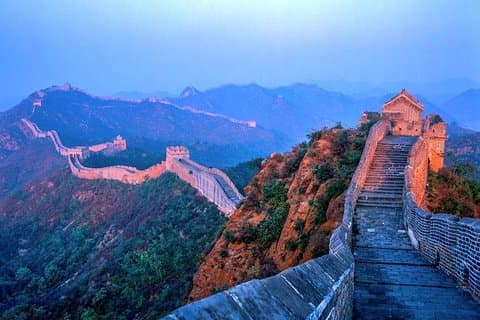
ransfer to Mutianyu great wall, need 90 minutes driving,80km.
ric car to the entry, and then take the chairlift up to the 14th watchtower. Have a leisurely hike on the wall for about 2 hours, at the end take the toboggan town. The Great Wall at Mutianyu was built and restored in the early Ming Dynasty (1368 - 1644) and is one of the most famous sections of the Wall. Mutianyu enjoys the great reputation of "Out of all the Great Walls, Mutianyu stands apart". Roam the ancient structure and learn the history and facts that make its so famous. Your professional guide will be able to answer any questions and offer exclusive stories and facts about the Mutianyu Great Wall.
The Ming Tombs lie in Changping County, about 50-kilometers northwest from the urban area of Beijing. The site is a tomb cluster of the Ming Dynasty (1368-1644), including 13 emperor's mausoleums, seven tombs for concubines and one grave for eunuchs. Located at the foot of Mount Yan, the surrounding area is extremely beautiful.
ving to the Beijing Lama Temple, need 18 minutes driving, 6km.
Begin the day at the calming Lama Temple and learn the site's fascinating history. The Yonghe Temple, also known as the Yonghe Lamasery, or popularly as the Lama Temple, is a temple and monastery of the Gelug school of Tibetan Buddhism located in Dongcheng District, Beijing, China. The building and artwork of the temple is a combination of Han Chinese and Tibetan styles.
a of 2.9 square kilometers, 3 quarters of which is water: Kunming Lake. This artificial lake was created by extending an existing body of water to imitate the West Lake in Hangzhou. The Summer Palace was Situated in the Haidian District northwest of Beijing, Summer Palace is 15 kilometers (9 miles) from the downtown area. Being the largest and most well-preserved royal park in China, it greatly influences Chinese horticulture and landscape with its famous natural views and cultural interests, which also has long been recognized as 'The Museum of Royal Gardens'.
our, a Hutong tour will definitely provide you with a chance to mingle with local residents and get a unique travel experience in the intricate winding Hutongs. They are maze-like, deep and exactly as they were a long time ago, recording the history of the city. Even today, there are many residents reluctant to move from their beloved Hutongs. You can visit a local family's house to experience authentic Beijing life and stop every now and then to take pictures.
ong is Nanluoguxiang in the Gulou, or Drum and Bell Tower, district, which has several kilometers of shops, galleries and cafés that range from the chic to the kitschy. You'll find lots of cool T-shirts here (Plastered has a good line) featuring tricked-out images of everything from Mao Zedong to garden gnomes.
End of your 7 day tour services.
We can pick up any hotels at Shanghai city central
If you cancel at least 3 full day(s) before the scheduled departure time, you will receive a full refund.<br>If you cancel within 3 day(s) of the scheduled departure, you will receive a 0% refund.
Browse Shanghai by category - skip-the-line tickets, walking tours, day trips, food experiences & more