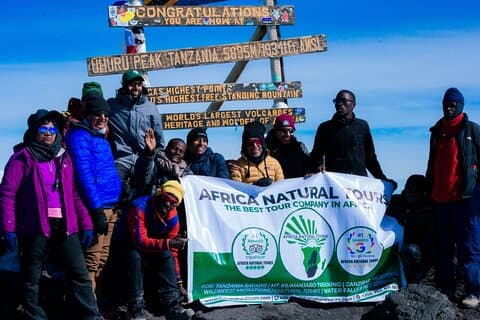
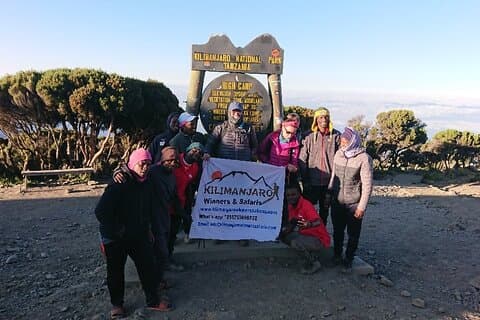
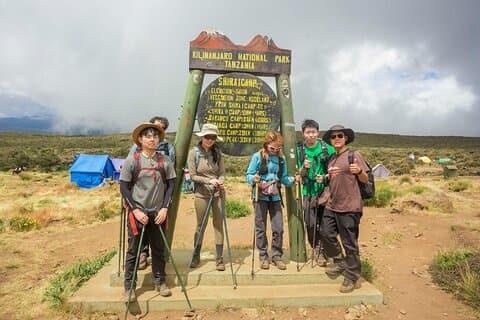
The Lemosho Route is widely considered to be the best route on Mount Kilimanjaro as it exposes the climber to great views from all angles. Not too long ago, there were only two main routes used to climb Kilimanjaro – the Marangu (Coca Cola) route and the Machame (Whiskey) route. But as Tanzania’s tourism industry flourished, the Kilimanjaro park authority created more trails to African’s highest peak. Lemosho, a relatively new route, is preferred by reputable operators due to its beauty, remoteness, and success rate. In short, it maximizes the chances that a climber will reach the summit, and enjoy the experience overall. The Lemosho route can be done in as little as six days (five nights) on the mountain.
From here follow a forest track in a 4WD vehicle for 11 km/7 mi (45 minutes) to Lemosho Glades and a possible campsite. From the Glades, walk for 3 hours along beautiful forest trails to the Mti Mkubwa (big tree) campsite.
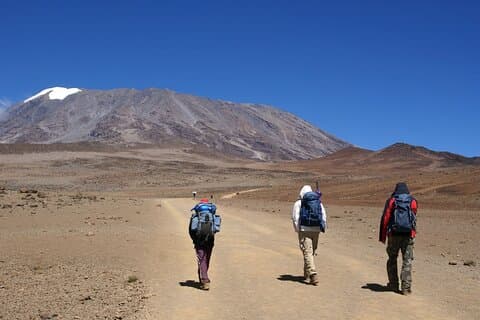
Our destination for today is the Shira 1 Camp from where there are often views of Kibo Peak floating on the clouds. We gain a reasonable amount of altitude today and parts of the route are fairly steep.
ide of the mountain with some unusual views of Kibo. Our steady climb across the moorland of the Shira Plateau will help with acclimatization and we enjoy great panoramic views. Our destination today is the Shira 2 Camp. In the afternoon you will take an acclimatization walk then head back to camp for dinner and overnight.
After several hours, you walk through a rocky landscape to reach the prominent landmark called Lava Tower at 4,630 m/15,190 ft. This chunky remnant of Kilimanjaros earlier volcanic activity is several hundred feet high, and the trail passes right below it. For extra credit, the sure-footed can scramble to the top of the tower. After a lunch stop near Lava Tower, descend for 2 hours below the lower cliffs of the Western Breach and Breach Wall to Barranco Camp at 3,950 m/12,960 ft. There are numerous photo opportunities on this hike, especially if the walls are festooned with ice. Barranco Camp is in a valley below the Breach and Great Barranco Walls, which should provide you with a memorable sunset while you wait for your dinner. On this day, be careful to notice any signs of altitude sickness.
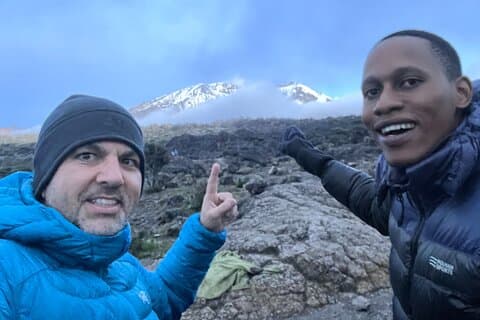
ou climb this imposing obstacle, which turns out to be easier than it looks. Topping out just below the Heim Glacier, you can now appreciate just how beautiful Kilimanjaro really is. With Kibos glaciers soaring overhead, you descend into the lush Karanga Valley to the Karanga Valley campsite. From the camp, you can look east and see the jagged peaks of Mawenzi jutting into the African sky. After a hot lunch in camp, your afternoon is at leisure for resting or exploring. After two long days, this short day is very important for your acclimatization, since your summit push is about to start.
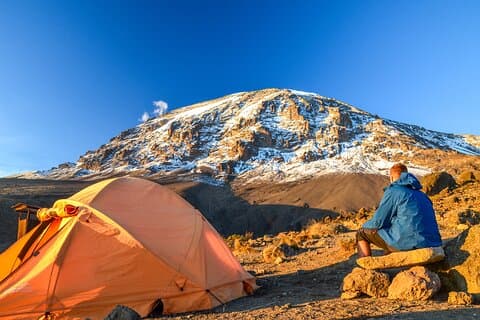
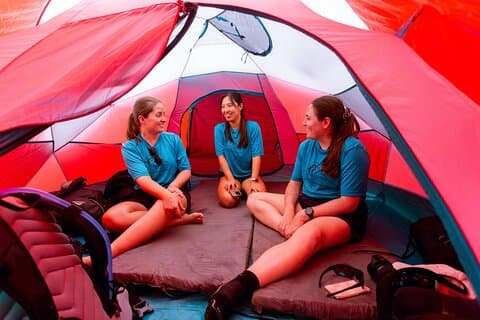
eka Route, which will be your descent route. Turn left toward the mountain and hike up the ridge through a sparse landscape for another hour to the Barafu Hut where you will receive a hot lunch. The last water on the route is in the Karanga Valley; there is no water at Barafu Camp, even though Barafu is the Swahili word for ice. The famous snows of Kilimanjaro are far above Barafu Camp near the summit of the mountain. Your tent will be pitched on a narrow, stony, wind-swept ridge, so make sure that you familiarize yourself with the terrain before dark to avoid any accidents. Prepare your equipment and warm clothing for your summit climb, and drink a lot of fluids. After an early dinner, go to bed for a few hours of precious sleep.
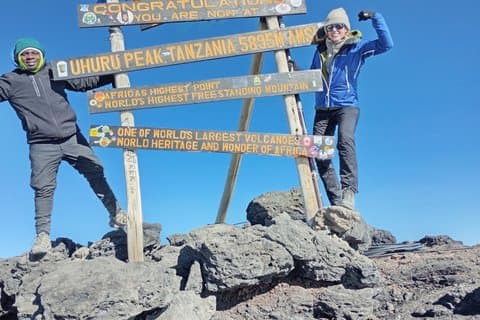
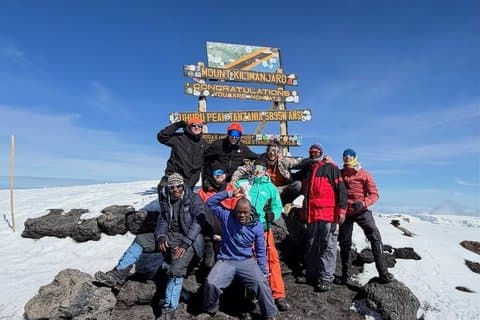
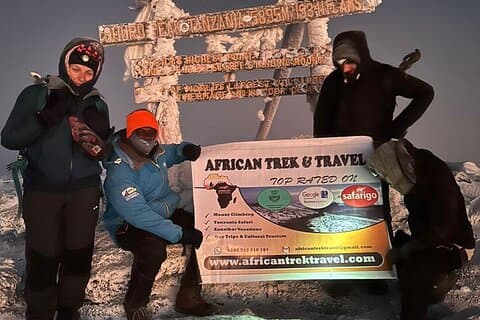
Your 6-hour climb northwest up through heavy scree between the Rebmann and Ratzel glaciers to Stella Point on the crater rim is the most challenging part of the route for most climbers. At Stella Point you stop for a short rest and a chance to see a supremely sanguine sunrise. At Stella Point you join the top part of the Marangu Route. Depending on the season and recent storms, you may encounter snow on your remaining hike along the rim to Uhuru Peak. On the summit, you can enjoy your accomplishment and know that you are creating a day that you will remember for the rest of your life. After your 3-hour descent from the summit back to Barafu Camp, you will have a well-earned but short rest, collect your gear, and hike down a rock and scree path into the moorland and eventually into the forest to Mweka Camp.
Don't give your porters any tips until you and all your gear have reached the gate safely, but do remember to tip your staff at the gate. At Mweka Gate, you can sign your name and add details in a register. This is also where successful climbers receive their summit certificates. Climbers who reached Stella Point are issued green certificates and those who reached Uhuru Peak receive gold certificates. From the Mweka Gate, you will continue down to the Mweka Village, possibly a muddy, 3 km, 1 hour hike if the road is too muddy for vehicles. In the Mweka Village you will be served a delicious hot lunch after which you are driven back to Moshi for an overdue hot shower and comfortable night at your hotel in Moshi.
Our driver will meet you at Kilimanjaro International Airport for pick up and transferred to your hotel in Moshi town.
If you cancel at least 3 full day(s) before the scheduled departure time, you will receive a full refund.<br>If you cancel within 3 day(s) of the scheduled departure, you will receive a 0% refund.
Blader Moshi op categorie - kaartjes zonder wachtrij, wandeltochten, dagtochten, foodervaringen en meer