유사한 경험
 Viator
 Viator
 Viator
 Viator
 Viator
 Viator
 Viator
 Viator
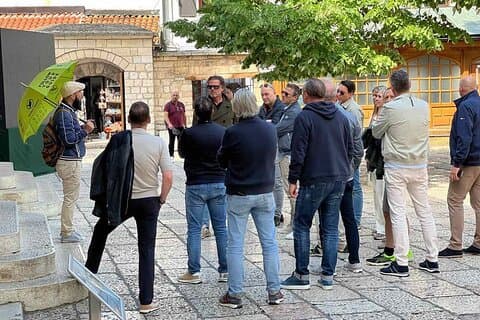
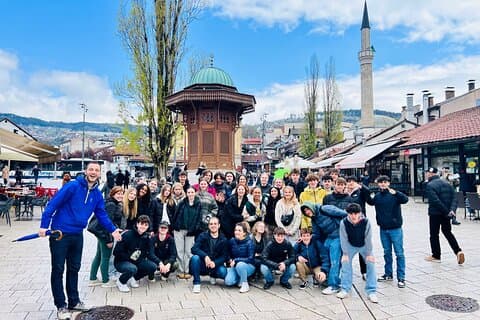
PROFESSIONAL SARAJEVO WALKING TOUR - With guide who guided STING!
5.0(29)2 Hours - 3 Hours- 무료 취소
시작가$31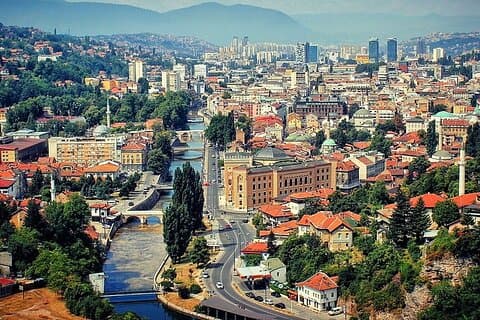 Viator
 Viator
 Viator
 Viator
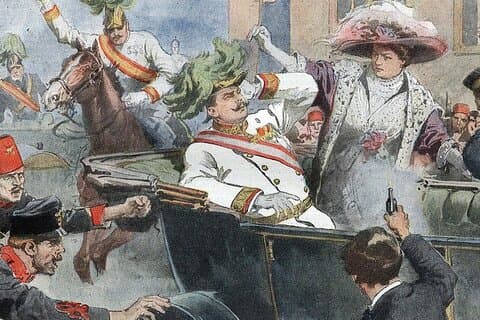
Discover one of the most significant moments in world history: the assassination of Archduke Franz Ferdinand in Sarajevo. This event set off a chain reaction that led to the start of World War I. Our Assassination Tour will take you through Sarajevo’s fascinating Austro-Hungarian period, unraveling the political climate of Europe and the motives behind the plot orchestrated by the Young Bosnia group. Unveil the story of the Sarajevo assassination and how it changed the world. Learn about Austro-Hungarian influence in Bosnia and Herzegovina. Visit key historical sites related to the assassination of Archduke Franz Ferdinand.
This cemetery is the final resting place of Gavrilo Princip and his fellow conspirators, buried in secrecy by Austro-Hungarian authorities. The Vidovdan Heroes Chapel now serves as a memorial to the Young Bosnia movement, whose actions sparked the outbreak of World War I.
Marsala Tita 16, Sarajevo, Bosnia and Herzegovina
Built during the Austro-Hungarian administration, this imposing structure once housed imperial officials overseeing Bosnia’s governance. On June 28, 1914, just a short distance from here, the fateful motorcade carrying Archduke Franz Ferdinand passed through Sarajevo’s streets.
Dalmatinska 4, 1st Floor, Sarajevo, Bosnia and Herzegovina
This immersive museum brings Sarajevo under Austro-Hungarian rule to life, showcasing the city’s transformation and rising nationalist tensions. Visitors can virtually witness the moments leading up to Franz Ferdinand’s assassination.
Ferhadija Street, Marsala Tita Street, Sarajevo, Bosnia and Herzegovina
While primarily a World War II memorial, the Eternal Flame stands near key Austro-Hungarian-era buildings. These structures, erected to cement imperial rule, bore witness to Sarajevo’s political unrest in the years leading to the assassination.
Mula Mustafe Baseskije 4A, Sarajevo, Bosnia and Herzegovina
Established during Austro-Hungarian rule, Markale Market became a bustling trade hub reflecting the empire’s modernization efforts. On the morning of the assassination, locals gathered here, unaware that their city was about to become the center of world history.
Trg Fra Grge Martica 2, Sarajevo, Bosnia and Herzegovina
Built in 1889, this Neo-Gothic cathedral symbolized Austro-Hungary’s efforts to solidify its presence in Bosnia. It stood along the route taken by Franz Ferdinand’s motorcade, witnessing the tension and chaos of that historic day.
Obala Kulina Bana, Sarajevo, Bosnia and Herzegovina
One of Sarajevo’s most iconic sites, this Ottoman-era bridge became infamous as the location where Gavrilo Princip fired the shots that altered world history. Standing here, one can visualize the fateful moments that led to World War I.
tro-Hungarian period and the assassination. Through exhibits detailing Franz Ferdinand’s visit and its aftermath, it offers an in-depth look at the empire’s rule and the rising nationalist movements.
Konak, Bosnia and Herzegovina
Once the residence of Austro-Hungarian governors, Konak played a key role in hosting officials during Franz Ferdinand’s visit. Hours before the assassination, it was at the center of imperial decision-making in Sarajevo.
Franjevacka 15, Sarajevo, Bosnia and Herzegovina
Sarajevo Brewery became a hub of industrial progress and social gatherings. On the day of the assassination, it stood as a silent witness to the unfolding of history.
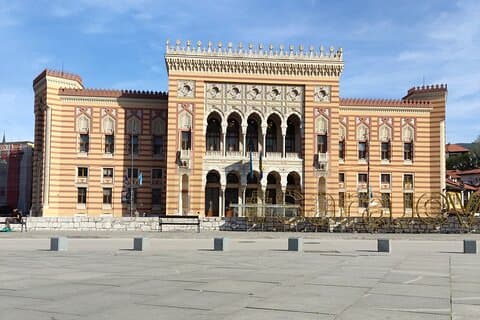
ted Archduke Franz Ferdinand’s official reception just before his assassination. That morning, he stood on its steps unaware that his fate—and the course of world history—had already been sealed.
Zelenih beretki 30
For a full refund, cancel at least 24 hours before the scheduled departure time.
Sarajevo를 카테고리별로 둘러보세요 - 스킵더라인 티켓, 도보 투어, 당일 여행, 음식 경험 등