유사한 경험
 Viator
 Viator
 Viator
 Viator
 Viator
 Viator
 Viator
 Viator
St. Anne's Museum - Medieval Sacred Art with a Private Guide
5.0(1)2 Hours - 4 Hours- 무료 취소
- 프라이빗 투어
시작가$247 Viator
 Viator
 Viator
 Viator
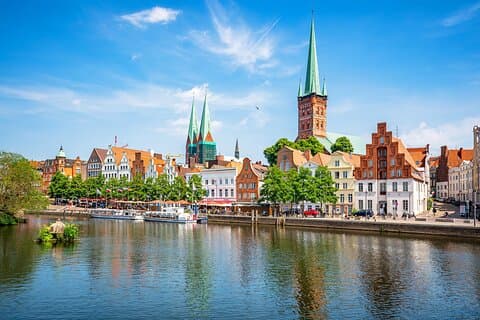
Sightseeing and walking tour of the cities of Lubeck and Wismar. In Lubeck you will see the Holsten Gate, the Holy Spirit Hospital, the St. Marien Church, the Town hall, the Buddenbrookhaus, etc. In Wismar you will see the St. George's Church, the market square, the merchant houses, the Fuerstenhof, the Town hall, etc.
Holstentorplatz, Lubeck, Germany
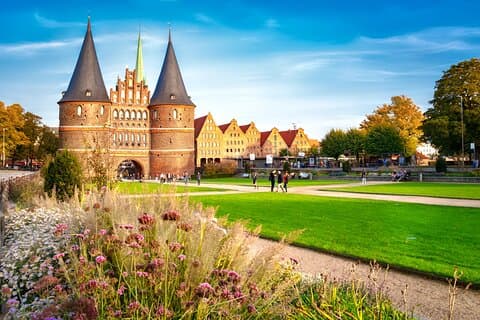
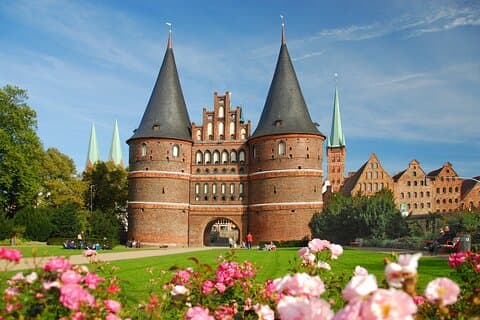
Holsten Gate (Holstentor) is one of the most famous sights in Lübeck. The city gate was built between 1464 and 1478 along the lines of Dutch models. The Holsten Gate became the proud symbol of Lübeck as a free imperial city. But it's not just the exterior that's a popular subject for photos. The "Holsten Gate Museum" is housed within the famous monument displaying the history of the Hanseatic League, trade, power and wealth.
Koberg 11, Lubeck, Germany
The Hospital of the Holy Spirit is the best surviving medieval building of this kind in Central Europe. The hospital was built in 1280 with donations from Lübeck merchants and is designed to accommodate 170 elderly and poor people. In its quality, the building worked until 1970.
Mary's Church (the Marienkirche) is the only remainder of the original Brick Gothic structure, built in the first half of the 13th century. It suffered heavy damage in World War II, and was partially razed in 1960 by the East German government. The Marienkirche tower is a big landmark of Wismar, seen from far away in the sea, along with St. Georgen church.
Breite Str. 62, , Lubeck, Germany
Lubeck Town Hall (Rathaus) is a beautiful building combining a mixture of several architectural styles; considered the oldest existing town hall in Germany. The Lübeck Town Hall is located in the historic city center (Altstadt), on the Market Square, next to St. Mary's Church.
Mengstrasse 4, Lubeck, Germany
Buddenbrook House (Buddenbrookhaus) is an elegant townhouse on Mengstrasse 4 in Lübeck. Built in 1758, this house is famous for the writers Thomas and Heinrich Mann who were born and lived here. Located opposite the church of St. Mary, the house was almost completely destroyed during the bombing of World War II, only the facade remained from the house. The house was not restored, as it was before, but the facade was abandoned and a museum in honor of Thomas Mann was built behind it.
It had escaped major damage during most of World War II, but was heavily damaged by "Blockbuster bombs" dropped by the British Royal Air Force on April 14, 1945, three weeks before the end of the war. The church is a big landmark of Wismar, seen from far away in the sea, along with Marienkirche.
of the old town is the huge Market Place, one of the largest in northern Germany, surrounded by elegant buildings with styles ranging from 14th-century North German Gothic to 19th-century Romanesque revival to Art Nouveau. The square's center is the Wasserkunst, an elaborate wrought-iron fountain imported from Holland in 1602.
al authorities, is a richly decorated specimen of the Italian early Renaissance style.
ble building in the square is a Brick Gothic Bürgerhaus (patrician's home) called the Alter Schwede (The Old Swede). 18:00 - 19:00 - You will be taken back to the ship.
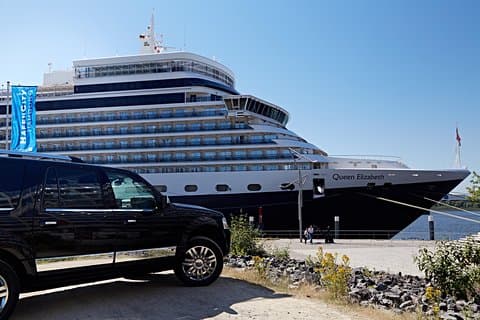
You will be met by your guide and driver in front of the cruise terminal.
All sales are final. No refund is available for cancellations.
Kiel를 카테고리별로 둘러보세요 - 스킵더라인 티켓, 도보 투어, 당일 여행, 음식 경험 등