LondonItineraryUnited KingdomTower of LondonWestminster
2 Days in London: The Perfect Weekend Itinerary
A 2-day London itinerary that flows: the Tower and the City on day one, Westminster and the royal core on day two, plus the tours travelers rate highest.
SimilarTours Editorialによる · Travel Research · · 17分間の読むことができます

Most first-timers try to do 2 days in London as one long sprint across the whole city, and spend half of it underground on the Tube getting from one side to the other. London does not reward that. It rewards clustering: the historic east around the Tower and the City is one coherent day, and the royal west around Westminster and Buckingham Palace is another. Give each half a day, let the river tie them together, and a weekend that could feel frantic instead flows.
This two days in London itinerary is built for exactly that first visit. Day one covers the Tower of London, Tower Bridge, and the old City; day two covers Westminster Abbey, Big Ben, Buckingham Palace, and the London Eye area. Every tour referenced is currently bookable through our partner OTAs and ranked on real ratings and review counts, verified July 2026.
Browse all London tours and experiences →Before you go
Where to stay. Stay central and on a strong Tube line. Westminster and the South Bank keep you close to day two's sights and a short river hop from day one's; Covent Garden and Bloomsbury sit in the walkable middle of everything; Kensington and Paddington are slightly further out but well connected and often better value. Pick one base for both nights, because London is too big to switch hotels mid-weekend without losing half a day.
How to get around. Tap in and out of the Tube and buses with a contactless card or phone; the daily fare caps automatically, so you never overpay by tapping too often. Keep the same card for the whole trip. Central London is more walkable than the map suggests, and short walks between neighboring sights often beat a two-stop train once you count the escalators.
What to book ahead. The timed-entry sights are the ones that sell out: the Tower of London and its Crown Jewels, and any guided Westminster Abbey or Houses of Parliament tour. Lock those in first and build each day around the slot. Hop-on-hop-off bus passes and Thames cruises you can usually grab a day or two out.
Weather and pace. London's weather turns on a coin any month of the year, so carry a light rain layer and do not let a grey forecast rearrange the plan; the sights are worth it wet or dry. Two days of central sightseeing is a lot of walking, often well past 15,000 steps a day, so build one proper sit-down meal into each day and use the river as a rest as much as a route.
Day 1: The Tower, Tower Bridge, and the City
Start in the east, where London is oldest. The Tower of London by the river, Tower Bridge beside it, and the narrow lanes of the City around St Paul's give you the historic, storybook side of the capital before the crowds thicken. The Tower is the anchor, so book a morning slot and let the rest of the day radiate out from it.
Morning: the Tower of London and the Crown Jewels
The Tower is the one sight to reserve first and arrive at early, before the queues build and while the Crown Jewels line is short. A guided visit with a Beefeater or a professional guide is the way to make sense of the sprawling fortress rather than wandering it cold, and several options fold in early or priority access.
Top Tower of London and Crown Jewels tickets and tours

Tower of London and Crown Jewels Exhibition Day Ticket
The most-reviewed way into the Tower by a wide margin - a straightforward day ticket covering the fortress and the Crown Jewels, ideal if you want to explore at your own pace.
4.4(7,227)24 hoursViewFrom$50
London in a Day: Tower of London, Westminster & River Cruise
A full guided day that strings the Tower, Westminster, and a river cruise together - the highest-rated big-ticket option, and a shortcut if you would rather compress both halves of the city into one guided run.
4.8(923)8 hoursViewFrom$129
Early Access Tower of London: Crown Jewels and Beefeater Ceremony
Gets you in ahead of the crowds for the Crown Jewels and a Beefeater ceremony - the early-access pick for beating the queues on a busy morning.
4.6(997)1 hourViewFrom$103
VIP Beefeaters Meet & Greet with Tower of London Guided Tour
A guided visit with a Beefeater meet and greet and strong ratings - the value pick if you want the guiding and the personal access without the top-tier price.
4.8(348)2 hoursViewFrom$56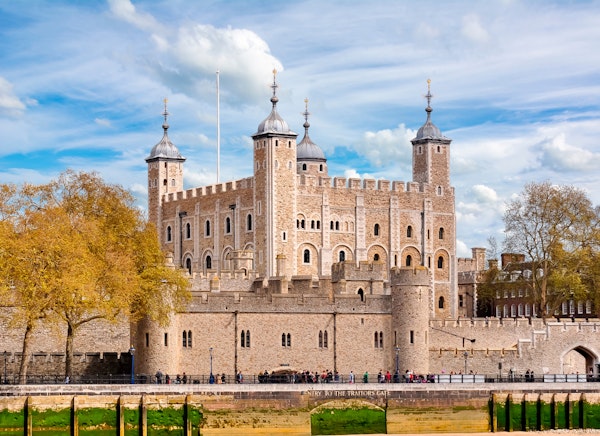
Tower of London Tickets with Access to the Crown Jewels
4.5(19,312)1 hr 15 minViewFrom$50
Private Tour: Tower of London with Private Guide
5.0(12)2 hr 30 minViewFrom$469
South Bank (London Bridge) Walking Tour & Enter The Tower of London
5.0(8)3 hoursViewFrom$134
Windsor Castle and Tower of London Tour Including Entry Tickets
3.8(10)8 hoursViewFrom$170Tower of London: VIP After Hours Access & Ceremony of the Keys
5.0(33)1 hr 45 minViewFrom$148
Private Tour: The Iconic Tower of London
5.0(28)2 hr 30 minViewFrom$354
Insider tip
Book the Tower slot first. The Crown Jewels line is the one queue in London that a booked, timed entry genuinely fixes. Reserve the earliest morning slot you can, arrive on time, and see the Jewels first thing before the coach groups land. Everything else on day one flexes around that fixed point, so lock it in before you plan the rest.
Afternoon: Tower Bridge, St Paul's, and the City lanes
Step straight out of the Tower onto the river and you are under Tower Bridge, the one people mistake for London Bridge. Walk across it for the view back at the fortress, then double back into the City, London's old square mile, where the modern towers hem in medieval alleys and the dome of St Paul's Cathedral rises over it all. This is a walking afternoon: no ticket required to enjoy the exteriors, the riverside, and the contrast of glass towers over cobbled lanes. If your legs are done, this is the moment to swap walking for the river.
The river: hop-on-hop-off buses and Thames cruises
A hop-on-hop-off pass, on the bus or the boat, doubles as sightseeing and transport, and on a two-day trip that efficiency is worth a lot. The river version is especially good here, because it runs between the Tower, the South Bank, and Westminster, so it quietly bridges day one and day two while you sit and watch the skyline slide past.
Top London hop-on-hop-off and Thames cruise passes

London Big Bus Hop-On Hop-Off Tour with Optional River Cruise
The most-booked sightseeing pass in the catalog by review volume - a hop-on-hop-off bus loop of the landmarks with an optional river cruise bolted on.
3.7(11,066)3.6 hoursViewFrom$43- viator
London Tootbus Hop on Hop off Bus Tour and Thames River Cruise
A bus-and-cruise combo with the cruise included rather than optional - a high-volume pick if you want the boat leg built into the pass.
3.9(3,853)2 hoursViewFrom$53 
Gray Line London Hop-On Hop-Off Bus Tour with Optional Cruise
A full-day bus pass with an optional cruise and the highest rating of the big bus options - good value for a day of hopping on and off around the center.
4.1(2,170)24 hoursViewFrom$34
Hop-On Hop-Off Sightseeing River Cruise on the Thames
A river-only hop-on-hop-off pass - the pick if you want the boat as transport between the Tower, the South Bank, and Westminster without the bus.
4.1(1,277)1 hourViewFrom$34
Classic London Sightseeing Bus Tour
4.9(18)1 hr 30 minViewFrom$34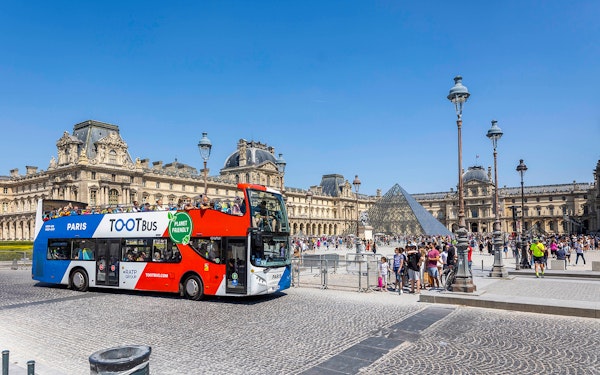
Tootbus: Paris Hop-on Hop-off Bus Tour (Optional Seine River Cruise)
4.5(3,226)ViewFrom$43
London Sightseeing Gusbourne Sparkling Wine Tasting & Cheese
5.0(9)1 hr 30 minViewFrom$67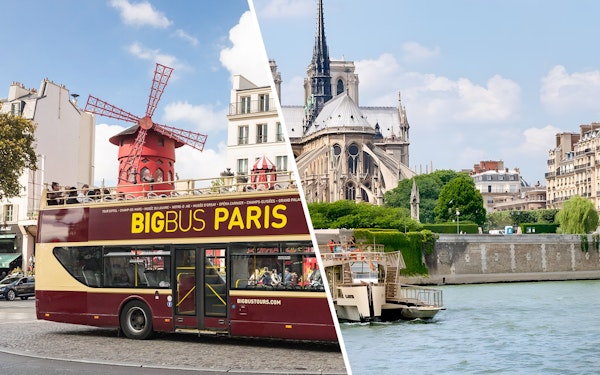
Big Bus: Paris Hop-On Hop-Off Bus Tour + Seine River Cruise
4.4(689)ViewFrom$52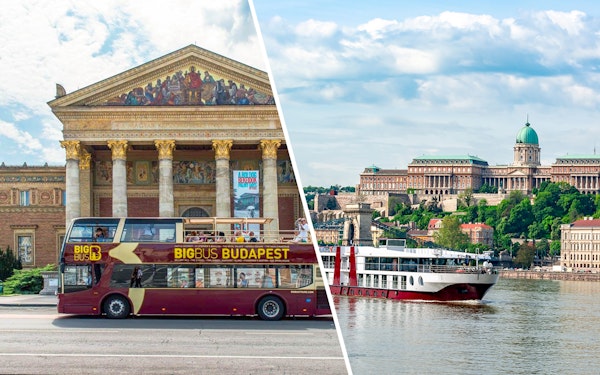
Combo: Budapest Hop-On Hop-Off Bus Tour + Danube River Cruise
4.5(2,005)ViewFrom$45
Dover to London with Borough Market Food Tour
5 hr 30 minViewFrom$285
Evening
End day one on the river. The South Bank, the pedestrian stretch across the water from the City, comes alive after dark with the illuminated dome of St Paul's opposite, the lit-up bridges, and a run of restaurants and pubs along the walk. Grab an early dinner with a river view, then keep the night short; day two starts in the west and covers a lot of ground. If you have energy left, the walk along the South Bank toward Westminster is one of the best free things to do in the city after dark, and it doubles as a preview of tomorrow.
Day 2: Westminster, the royals, and the London Eye
Day two moves west to the political and royal heart of the city. Westminster Abbey, the Houses of Parliament with Big Ben, Buckingham Palace, and the London Eye all sit within a walkable cluster around St James's Park, which makes this the tightest, most efficient day of the two. A guided Westminster tour is the anchor; the rest falls into place around it.
Morning: Westminster Abbey, Big Ben, and Parliament
This is the postcard London that people picture: the Abbey, the Gothic spread of the Houses of Parliament, and Big Ben over the river. A guided Westminster tour is the best way in, because it usually bundles skip-the-line Abbey entry with the context that turns the stones into a story, and often takes in Big Ben and Buckingham Palace on the same loop.
Top Westminster Abbey and Parliament tours

Westminster Abbey Skip-the-Line Tour, Big Ben & Buckingham Palace
The most-reviewed Westminster tour in the catalog - skip-the-line Abbey entry with Big Ben and Buckingham Palace on the same walk, which is exactly the day-two cluster in one go.
4.6(1,360)4 hoursViewFrom$94
Westminster Guided Walking Tour with Abbey Entry
A high-rated guided walk with Abbey entry included - the pick if you want a focused, well-led Westminster tour rather than a broad sweep.
4.8(1,324)5 hoursViewFrom$133
Westminster Abbey, Big Ben, Buckingham Guided Tour of London
The highest-rated of the Westminster cluster tours by score - the Abbey, Big Ben, and Buckingham Palace led together, and a strong all-in-one for the morning.
4.9(884)3.5 hoursViewFrom$111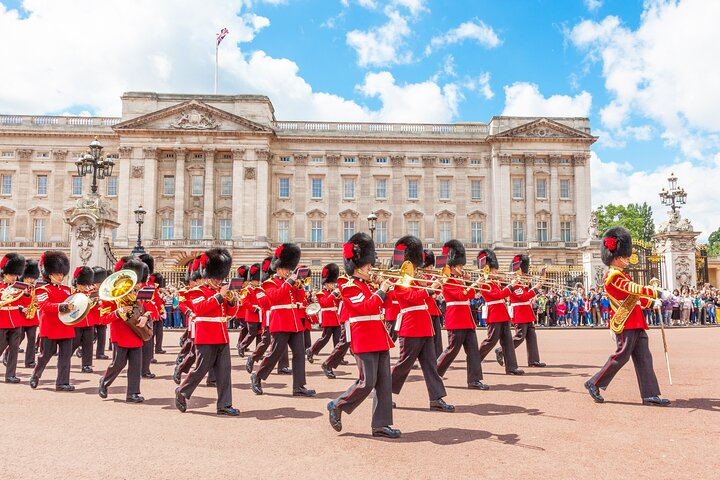
The Changing of the Guard Tour and Buckingham Palace
The value pick focused on the Changing of the Guard at Buckingham Palace - a short, well-rated tour if you mainly want the ceremony and the palace forecourt.
4.7(439)2.3 hoursViewFrom$24
Classic London Tour with Westminster Abbey, Skip the Ticket Line
5.0(9)5 hoursViewFrom$102
Private Walking tour London, Buckingham Palace to Big Ben and much more
5.0(10)3 hr 30 min - 4 hoursViewFrom$304
Skip-the-line London Westminster Abbey and City of Westminster Kid-Friendly Tour
5.0(8)2 hr 30 minViewFrom$328
Private Tour London Highlights, entries Westminster Abbey, The Tower of London
5.0(100)8 hoursViewFrom$644
Westminster Small Group Guided Tour with Changing of the Guard
5.0(35)2 hr 45 minViewFrom$140
Essential London Tour and Changing of the Guard
5.0(15)2 hours - 2 hr 30 minViewFrom$20
Afternoon: Buckingham Palace and St James's Park
From the Abbey, walk through to Buckingham Palace, timing it if you can for the Changing of the Guard, the ceremony with the bearskin hats and the marching that draws a crowd on the forecourt. Between the Abbey and the palace sits St James's Park, the prettiest of the royal parks and the ideal spot to slow down, sit by the lake, and let a walking-heavy morning settle. The whole royal core is compact enough that you can wander it on foot without a single train.
Late afternoon: the London Eye and the South Bank
Cross the river to the London Eye for the aerial version of everything you have just walked. The wheel gives you the two-day itinerary from above in one slow rotation: the Tower and the City in the east, Westminster and the palace in the west, the river threading between them. It is the natural closing note, and it puts you right back on the South Bank for the evening.
Compare all London tours and experiences →If you have an extra day: London day trips
If your weekend stretches to a third day, the smartest use of it is a day trip out of the city rather than more of the center. London sits within easy reach of some of Britain's headline destinations: the ancient stone circle of Stonehenge, the honey-colored colleges of Oxford, the Roman baths of Bath, the castle town of Windsor, and the Shakespeare country of the Cotswolds. Most run as guided coach days that handle the logistics for you, which is the point on a tight trip. Our dedicated guide to the best day trips from London breaks down which pairing is worth the early start and how far each one really is.
See all London day trips and experiences →Practical tips
Book the Tower and any Westminster Abbey tour before you arrive. Those are the timed-entry sights where a reservation saves the most time and prevents a sold-out morning from breaking the plan.
Use a single contactless card or phone for the whole trip. The Tube and bus fares cap automatically each day, so you never need to work out which ticket to buy, and one card for two travelers is not shared, so tap separately.
Thread the river through both days. A hop-on-hop-off boat pass is transport and sightseeing at once, and it runs between the two areas this itinerary splits, so it earns its price twice over.
Pack a light rain layer whatever the forecast says. London weather changes hour to hour, and the sights are worth doing wet; do not let a grey sky collapse the plan.
Cluster, do not crisscross. The single biggest time-saver in London is grouping sights by area, east on day one, west on day two, rather than bouncing across the city chasing a checklist.
Quick recap: your 2 days in London
Day 1, the historic east. Morning at the Tower of London and the Crown Jewels; afternoon across Tower Bridge, through the City, and past St Paul's; a hop-on-hop-off bus or river pass to save your legs; an evening on the South Bank.
Day 2, the royal west. Morning at Westminster Abbey, Big Ben, and Parliament; afternoon at Buckingham Palace, the Changing of the Guard, and St James's Park; a late-afternoon spin on the London Eye to see the whole weekend from above.
Two days done right leaves London feeling covered rather than rushed, and gives you a clear, easy list for the next visit, which in London there almost always is.
Plan your trip
See all London tours and experiences →Is 2 days enough for London?
Two days is enough to cover London's headline sights and get a real feel for the city, as long as you cluster by area rather than crisscross. One day for the Tower and the historic City in the east, one day for Westminster and the royal core in the west, and you will have walked the two halves that most first-timers come to see. It is not enough to exhaust London, which almost nothing is, but it is a genuinely satisfying weekend that leaves you with a clear list for a return trip.
How do you get around London in 2 days?
The Underground, known as the Tube, plus buses and the occasional walk covers everything in this itinerary. Tap in and out with a contactless card or phone rather than buying paper tickets; the daily fare is capped automatically, so you never overpay. Central London is also more walkable than it looks on the map, and stitching short walks between neighboring sights often beats waiting for a train two stops.
What is the best area to stay in London for a short trip?
For a two-day trip, stay central and on a good Tube line. Westminster, South Bank, Covent Garden, and Bloomsbury put you within a short ride or walk of most of this itinerary. Kensington and Paddington are slightly further out but well connected and often better value. The main thing is to pick one base and stay put; London is large, and switching hotels mid-trip on a two-day visit wastes time you do not have.
What should I book ahead for London?
The timed-entry attractions are the ones to lock in first: the Tower of London and its Crown Jewels, and any guided Westminster Abbey or Houses of Parliament tour, all sell out of prime slots in peak season. Hop-on-hop-off bus passes and Thames river cruises are easier to grab a day or two out. Booking the timed tickets ahead also lets you build the day around a fixed morning slot rather than queuing on the pavement.
Can you see the Tower of London and Westminster in the same trip?
Yes, and splitting them across the two days is exactly how this itinerary works. The Tower of London sits in the east by Tower Bridge; Westminster Abbey, Big Ben, and Buckingham Palace cluster in the west. Trying to do both properly in one day means a lot of backtracking, so give the Tower and the City day one, and Westminster and the royal core day two.
Is a Thames river cruise worth it in London?
For a first visit, a river cruise is one of the best-value ways to see the city, because so many of London's landmarks line the Thames. A hop-on-hop-off river pass doubles as transport between the Tower, the South Bank, and Westminster, so you sightsee and move between the two days' areas at the same time. It is also a welcome sit-down break in a walking-heavy weekend.
How much should I budget for tours in London in 2 days?
London runs pricier than many capitals, but the range is wide. Skip-the-line attraction tickets and short guided tours often sit in the $40 to $130 band, while full-day combined tours and premium access experiences run higher. A reasonable plan is one anchor experience per day, a Tower and Crown Jewels visit on day one, a Westminster tour on day two, with a hop-on-hop-off or river pass threaded through both.
What is the best time of year to visit London?
Late spring and early autumn hit the sweet spot: milder weather, long daylight, and slightly thinner crowds than midsummer. Summer is warm and busy with the longest days; winter is cold and grey but atmospheric, quieter at the big sights, and cheaper. London's weather is changeable year round, so pack a light rain layer whatever the season and do not let a forecast rearrange your whole plan.
Do I need a guide for London's main sights?
Not strictly, but a guide earns its keep at the layered sights. A Beefeater or professional guide at the Tower, or a guided Westminster walk, turns a set of buildings into a story and often includes the skip-the-line entry that saves the most time. For the river, the buses, and general wandering, you are fine on your own with a good map and a contactless card.
Keep reading
その他の読み物
あなたの旅行計画に役立つガイド

ロンドン1日の過ごし方: 時間を無駄にしない現実的なプラン
ロンドン1日の過ごし方。実際に収まることを中心に計画した、歩いて回れるルート、必ず予約すべき2つのこと、1時間ずつ無駄になる罠について。

The Best Museums in London: Which of Them Deserve Your Day
London has more world-class museums than any trip can absorb, and most of them are free. A guide to which ones suit which visitor, and how many you can realistically do.

ロンドン夏旅行ガイド: 何を予約すべきか、何をスキップするか、2026年に何を着るべきか
ロンドンの夏を計画的に過ごすための実用ガイド - シーズンの実際の過ごし方、事前予約する価値のある体験、毎時間変わる天気に対する準備

2026年のバッキンガム宮殿チケット: 種類、ツアー、スキップ・ザ・ラインの方法
2026年のバッキンガム宮殿チケットガイド - State Rooms時間制限付き入場、スキップ・ザ・ライン、衛兵交代式ツアー、ロイヤルコンボを比較。

2026年ウェストミンスター・アビー・チケット: 種類、ツアー、行列をスキップする方法
2026年版ウェストミンスター・アビー・チケットガイド - 時間指定入場(音声ガイド付き)、行列スキップ、シュヴァー主導ツアー、ロンドン周辺チケット比較。

5 Days in London: The Full Itinerary, Day by Day
A 5-day London itinerary: the Tower and Westminster, Greenwich by riverboat, a Stonehenge or Windsor day trip, plus markets and real neighborhood time.

Best Walking Tours in London: Beatles, Ripper, Royals and More
The best walking tours in London by theme: classic highlights, royal Westminster, Beatles and Abbey Road, Jack the Ripper, Harry Potter, and food walks.

London in Winter: What It's Really Like and How to Enjoy It
An honest guide to London in winter: how cold it gets, the festive season, the quieter big attractions, theatre and afternoon tea, and how to plan the days.