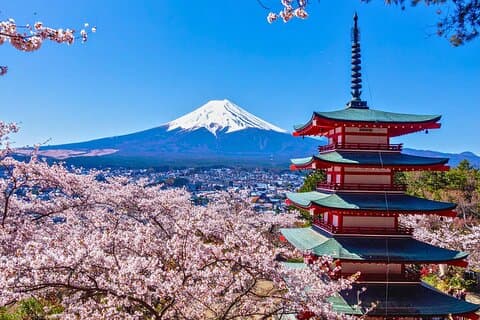
This is the ideal pick for independent travelers wanting to discover lots of Mt. Fuji and Hakone area highlights with guide and vehicle. -Mount Fuji Area: Fresh air, beautiful flowers, picturesque lakes..all set to the backdrop of Japan's most famous mountain,Mount Fuji. -Hakone Area: Nestled in the mountains, Hakone is a place of natural and artistic wonders. Visit Owakudani to see the ever-rising sulfurous gasses from the active volcano that provides heat to the many hot springs nearby.
You can customize your tour directly with the guide after placing your reservation.
Please craft your itinerary by choosing 3 to 4 spots on the ‘what to expect’ or ‘itinerary’ list. *1 to 2 spots from No.2 to No.16, 1 to 2 spots from No.17 to No.20.
Note*: Tour details has a possibility of change depending on the traffic conditions.
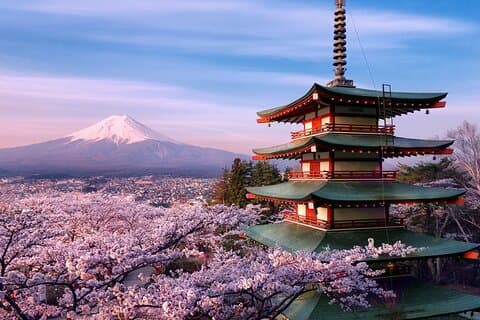
Its buildings have been destroyed by fire and rebuilt several times, yet the shrine and surrounding forest retain an atmosphere of both peace and mystery
Today, the lake with Mount Fuji in the background is a symbol of Hakone. The lake's shores are mostly undeveloped, except for small towns in the east and north and a few lakeside resort hotels. The best views of the lake with Mount Fuji can be enjoyed from Moto-Hakone and from the Hakone Detached Palace Garden.
Famous for black boiled eggs that are said to bring long life!
of Art (ポーラ美術館, Pōla Bijutsukan) in 2002 in order to display the extensive private art collection of the company's late owner, Suzuki Tsuneshi. The museum was built amid a forest of 300 year old beech trees, and although constructed of concrete and glass, it is designed so as not to disrupt the natural environment that surrounds it. To achieve this, the majority of the building is located underground. The museum features modern and contemporary paintings, sculptures, ceramics and glassware by mostly Japanese and European artists. In addition to temporary exhibits, the museum displays rotating exhibits drawn from its permanent collection which include works by artists such as Cezanne, Monet, Picasso and Renoir. Admission 1800 yen (1600 yen with the Hakone Free Pass)
It connects Sounzan Station (at the terminus of the Hakone Tozan Cablecar) with Togendai Station (at the shore of Lake Ashinoko) and stops at Owakudani and Ubako stations on the way. The ropeway is fully covered by the Hakone Free Pass. The ropeway's gondolas depart every minute and fit around ten people each. Traveling the full length of the ropeway takes around 30 minutes. Along the journey, passengers can enjoy views of the active, sulfuric hot spring sources of the Owakudani Valley between Sounzan and Owakudani and of Lake Ashinoko and Mount Fuji between Owakudani and Togendai if visibility allows. A transfer of gondolas is necessary at Owakudani, but no transfer is needed at Ubako. Admission 1480 yen (one way), covered by the Hakone Free Pass
Houses a beautiful stained glass staircase.
owcasing a wide collection of art pieces dating from antiquity to the modern era. Opened in 2013, the museum features a large array of East Asian ceramics, sculptures and paintings, all housed in a very spacious, modern facility surrounded by expansive grounds that feature a Japanese garden, a teahouse and a cafe with hot spring foot bath. The heart of the museum's collection lies in its huge collection of Chinese and Japanese ceramics and sculptures, which dominates the first two floors, including ancient Chinese bronzes, Tang and Ming porcelain, early Japanese pottery and more. The upper floors focus on Japanese art, with a variety of art forms and time periods represented. Most items on display are labeled with basic information in English, Chinese, Korean and Japanese.
Its sister museum, the MOA Museum of Art was later built in Atami City on the Izu Peninsula. The museum displays mainly Japanese ceramics from prehistoric times through the Edo Period (1600-1868). These include a number of large earthenware and ceramic vessels such as a haniwa burial statue classified as an Important Cultural Property. Admission 900 yen (700 yen with the Hakone Free Pass)
Established in 1356 in a quiet area at the base of a hill, the atmospheric temple has a small network of pleasant walking trails which wind through its wooded grounds and cemetery. What lends Choanji its particular charm, however, are the over two hundred statues of rakan (disciples of Buddha) scattered around the temple grounds. The statues began appearing in the 1980s and have been accruing ever since. Each statue has a unique face and shape, some contemplative and serious, others casual and humorous, and many show a modern edge in their artistic style and expressiveness compared to other collections of rakan statues. In autumn, the temple grounds are also one of Hakone's nicer spots to enjoy the autumn colors. The many color-changing trees here usually reach their peak color around mid November.
A great place for minature lovers.
cal garden in the highlands of Fuji Hakone Izu National Park. The park was founded in 1976 as a place to preserve and exhibit over 1700 varieties of marsh and alpine plants native to Japan. The garden offers a network of boardwalk paths through different types of marshland where you can learn about the plants that populate the wetlands. Information signs are in English and Japanese. The garden is popular during June when its Nikko Kisuge (daylily) are in full bloom, however it is closed during the winter months. Admission 700 yen (600 yen with the Hakone Free Pass)
Outside is a large strolling garden surrounding a canal like pond. The garden has a number of large glass sculptures laid about it, as well as a cafe with an open terrace at one end where live canzoni (Italian ballads) performances are held. The Glass no Mori's Venetian Glass Museum houses a collection of over 100 pieces of Venetian glassware. It displays both modern and classical works in all forms including vases, goblets, lamps and sculptures. The Hakone Glass no Mori is run by the Ukai Group, an operator of themed high class restaurants, which also owns the Kawaguchiko Music Forest at Kawaguchiko in the Fuji Five Lakes region. Admission 1500 yen (1400 yen with the Hakone Free Pass)
seum dedicated to a style of painting known as nihonga. Literally meaning "Japanese-style painting", nihonga are paintings that adhere to traditional Japanese artistic conventions, techniques, tools and materials. The label was originally meant to simply distinguish the art from Western-style paintings, but artists have since expanded the scope of nihonga to also include Western techniques. Besides the art collection, the museum features an impressive panorama lounge and cafe with large windows overlooking Lake Ashinoko. On a clear day, it affords one of the best views of Mount Fuji, the lake and the floating torii gate of Hakone Shrine. Admission 1300 yen (1100 yen with Hakone Free Pass or online coupon)
It is a relaxing place to unwind and enjoy the scenery and views of Hakone. Gora Park is primarily a French styled landscape park featuring a large fountain and a rose garden. The park also has two greenhouses, one housing a tropical botanical garden while the other contains a flower garden. Additionally, there is a restaurant overlooking the main fountain, as well as the Hakuun-do Chaen teahouse. In the Crafthouse visitors can take part in craft activities such as glass blowing, glass etching, pottery and dried flower arrangement. Activities range in cost from 1000 to 5000 yen and take from 30 minutes to an hour to complete. Admission 550 yen (free with the Hakone Free Pass)
From the top, an amazing view of Mt Fuji, Lake Kawaguchiko and the surrounding area can be seen.
The village consist of 8 ponds that are formed from the spring water from the snow melt of Mt Fuji.
The Fuji Five Lakes consists of Lake Kawaguchiko (河口湖), Yamanakako (山中湖), Lake Saiko (西湖), Lake Motosuko (本栖湖) and Lake Shoji (精進湖), and they are popular tourist destination for all year round for sightseeing, hiking, camping, fishing, cruising, museums, and more. Lake Yamanaka lake displays a stunning view of the lake itself and Mt Fuji on its background.
wn as Yoshidaguchi 5th Station or Kawaguchiko 5th Station) lies at approximately the halfway point of the Yoshida Trail, which leads from Fujiyoshida Sengen Shrine at the mountain's base to the summit of Mount Fuji. It is the most popular of the four 5th stations on Mount Fuji and the best developed and easiest to access by public transportation from Tokyo. The Fuji Subaru Line 5th Station is accessible almost year round, snow conditions permitting, and is a popular sightseeing spot even outside of the climbing season.
It offers close-up views of Hakone’s geothermal activity. Advance reservation is required and the entrance fee is 800 yen.
We can only pick you up within Tokyo City. We cannot pick you up out of the Tokyo area. If your hotel or desired pick up point is not on the list, please contact us.
For a full refund, cancel at least 24 hours before the scheduled departure time.
Sfoglia Tokyo per categoria - biglietti salta-fila, tour a piedi, gite giornaliere, esperienze gastronomiche e altro


%2520Pass%252018.jpg%3Fw%3D600%26auto%3Dformat%252Ccompress%26fit%3Dcrop%26q%3D75&w=1920&q=75)
![teamLab Planets Skip-the-Line Tickets [Premium Pass]](/_next/image?url=https%3A%2F%2Fcdn-imgix.headout.com%2Fmedia%2Fimages%2F63658f937f475e757a859abbf0d0e820-18403-tokyo-team-lab-planets-tokyo-admission-ticket-05.jpg%3Fw%3D600%26auto%3Dformat%252Ccompress%26fit%3Dcrop%26q%3D75&w=1920&q=75)