Visit highlights of China including the Beijing,Datong and Xi'an by Bullet Train with this 7 days private tour from Beijing.
You will be picked up from Beijing hotel and dropped off at Xi'an hotel.
day Forbidden City and Temple of Heaven city tour.
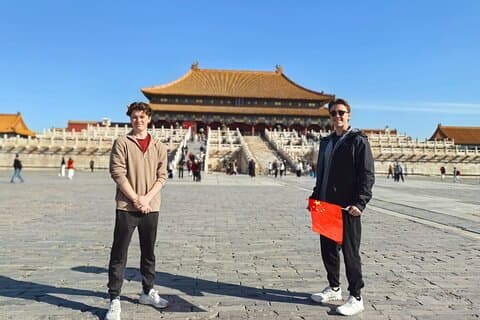
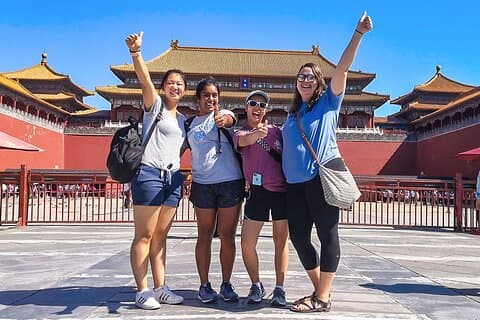
Gu Gong in Chinese, lies at the city center of Beijing, and once served as the imperial palace for 24 emperors during the Ming and Qing Dynasties (1368 - 1911). It was first built throughout 14 years during the reign of Emperor Chengzu in the Ming Dynasty (1368-1644). Ancient Chinese Astronomers believed that the Purple Star (Polaris) was in the center of heaven and the Heavenly Emperor lived in the Purple Palace. The Palace for the emperor on earth was so called the Purple City. It was forbidden to enter without special permission of the emperor. Hence its name 'The Purple Forbidden City', usually 'The Forbidden City'.
Covering an area of 57 acres (about 230,000 square meters), the park stands on the central point of the south-north axis of the city and faces the north gate of the Forbidden City. It is found on Jingshan Hill, which was originally named Wansui Hill (Long Live Hill), Zhen Hill or Meishan Hill (Coal Hill). The mid summit of the hill is the highest point in Beijing. Looking from the peak, you will able to get a full and clear view of the Forbidden City.
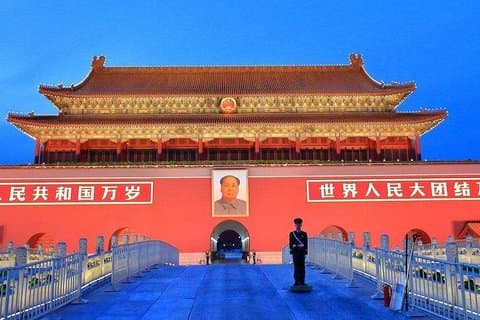
Beijing named after the Tiananmen (literally translated as the “Gate of Heavenly Peace”). It sits to the city's north, separating it from the Forbidden City. As a symbol it has great cultural significance, as it was the site of several key events in Chinese history.
en, is a complex of Taoist buildings situated in south-eastern urban Beijing, known as the Xuanwu District. The complex was visited by the Emperors of the Ming and Qing dynasties for annual ceremonies of prayer to Heaven for good harvest. It is regarded as a Taoist temple, although the Chinese Heaven worship by the reigning monarch “ohe day” pre-dates Taoism. The Temple of Heaven is a must-see attraction in Beijing!
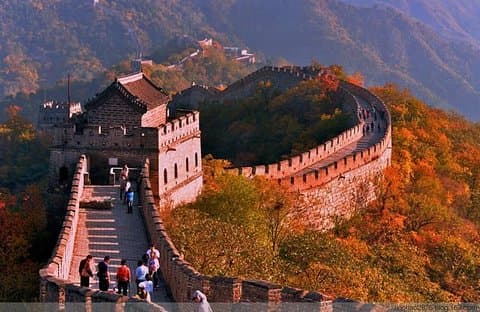
ansfer to Mutianyu great wall, need 90 minutes driving,80km.
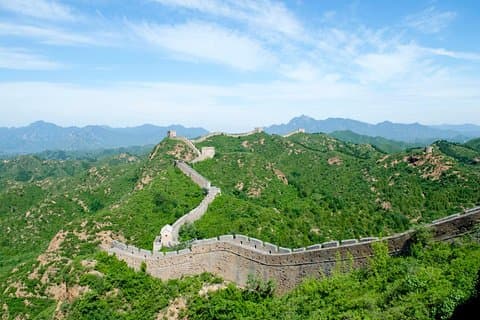
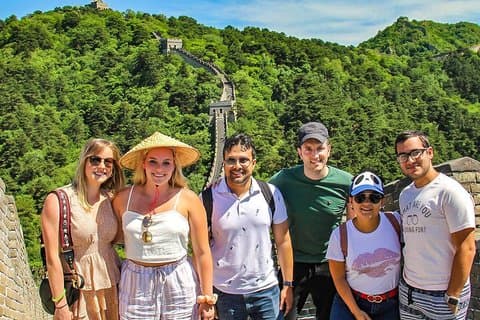
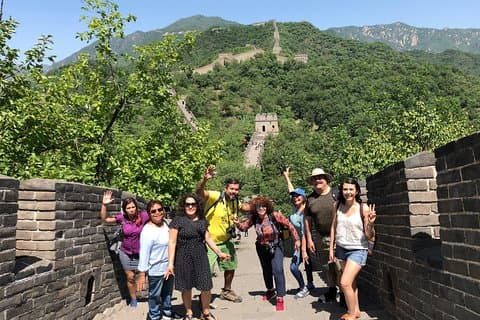
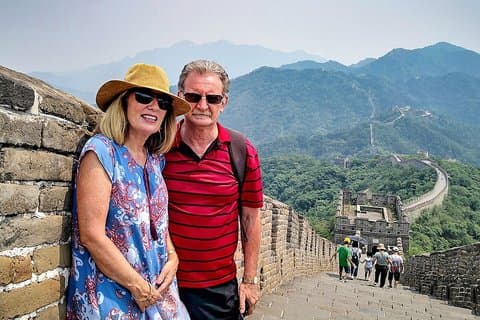
The Great Wall at Mutianyu was built and restored in the early Ming Dynasty (1368 - 1644) and is one of the most famous sections of the Wall. Roam the ancient structure and learn the history and facts that make its so famous. Your professional guide will be able to answer any questions and offer exclusive stories and facts about the Mutianyu Great Wall.
The Ming Tombs lie in Changping County, about 50-kilometers northwest from the urban area of Beijing. The site is a tomb cluster of the Ming Dynasty (1368-1644), including 13 emperor's mausoleums, seven tombs for concubines and one grave for eunuchs. Located at the foot of Mount Yan, the surrounding area is extremely beautiful.
ing to the Beijing Lama Temple, need 18 minutes driving, 6km.
Begin the day at the calming Lama Temple and learn the site's fascinating history. The Yonghe Temple, also known as the Yonghe Lamasery, or popularly as the Lama Temple, is a temple and monastery of the Gelug school of Tibetan Buddhism located in Dongcheng District, Beijing, China. The building and artwork of the temple is a combination of Han Chinese and Tibetan styles.
of 2.9 square kilometers, 3 quarters of which is water: Kunming Lake. This artificial lake was created by extending an existing body of water to imitate the West Lake in Hangzhou. The Summer Palace was Situated in the Haidian District northwest of Beijing, Summer Palace is 15 kilometers (9 miles) from the downtown area. Being the largest and most well-preserved royal park in China, it greatly influences Chinese horticulture and landscape with its famous natural views and cultural interests, which also has long been recognized as 'The Museum of Royal Gardens'.
our, a Hutong tour will definitely provide you with a chance to mingle with local residents and get a unique travel experience in the intricate winding Hutongs. They are maze-like, deep and exactly as they were a long time ago, recording the history of the city. Even today, there are many residents reluctant to move from their beloved Hutongs. You can visit a local family's house to experience authentic Beijing life and stop every now and then to take pictures.
ong is Nanluoguxiang in the Gulou, or Drum and Bell Tower, district, which has several kilometers of shops, galleries and cafés that range from the chic to the kitschy. You'll find lots of cool T-shirts here (Plastered has a good line) featuring tricked-out images of everything from Mao Zedong to garden gnomes.
lway Station, where a train to Datong is waiting for you(G2505 8:40-11:00am). The train takes around 2.5 hours.
Upon arrival at the Yungang Grottoes, our guide will accompany you as you to go around viewing more than 59,000 solemn Buddha statues made during the Northern Wei Dynasty (386 - 534). Considered to be a treasure house of Buddhist arts, Yungang Grottoes took over 70 years to reach the present scale. The sculptures there integrate the superb artistry of Northern Wei and showcase the atmospheric and imperial style. You are sure to feel astonished by the magnificent scene there.
It will be a thrilling experience to go along the hanging walkways to visit each hall of the temple. It is unique that the hierarchs of Buddhism, Taoism and Confucianism are worshiped here together.
16:58) drive you to Datong Railway Station where a train to Xi'an is waiting for you. The train takes around 6 hours.
hen transfer to Terracotta Warriors Museum, need 80 minutes driving,45km.
Following your guide, you will explore the Terracotta Warriors Museum by visiting the three excavated pits, as well as the Bronze Chariots and Horses Exhibition Hall. Although the clay warriors and horses have been buried for more than 2,200 years, they are still vivid with distinct appearances. You will spend at least two and a half hours to see this amazing site.
Temple, about one kilometer south of Xi'an city proper. It is one of the two famous and important Buddhist pagodas erected in the Tang Dynasty about 1300 years ago. Small Wild Goose Pagoda and its large neighbor, Big Wild Goose Pagoda, are two important Buddhist sites, dating back to the Tang Dynasty, 1300 years ago. The two pagodas were a symbol of Chang'an (Constant Peace) city. Xi'an (West Peace) was called Chang'an until the Ming Dynasty (1368-1644), when Beijing became the capital of China. Chang'an had served as the capital for ten dynasties.
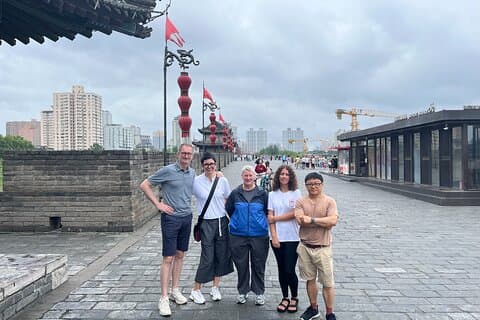
the wall, the bike fees you pay locally if you do that. The first landmark visitors will encounter in Xian is the ancient City Wall, which stretches round the old city. It is also one of the most famous attractions in Xian. Today, this wall represents one of the oldest and best preserved Chinese city walls, as well being one of the largest ancient military defensive systems in the world.
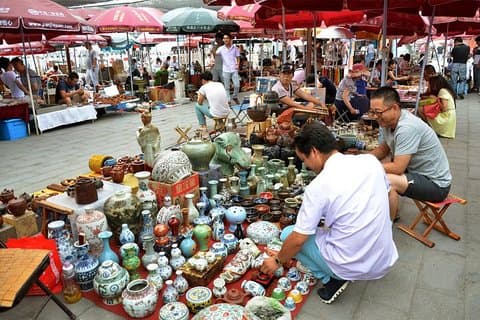
If you are interested, you can explore the bazaar at your own pace and then return to the hotel by yourself. Our guide will give you directions for returning to your hotel. The Great Mosque and the Bell and Drum Tower Square are within walking distance of the Bazaar. There are many boutique stores at fair prices in Bazaar and also a number of excellent choices of food for dinner.
then transfer to Hanyanglin, need 30 minutes driving,15km.
site of the Mausoleum of Western Han Emperor Liu Qi built in 153 AD. In the company of the guide, you will have a close look at the thousand-year-old tombs through the glass floors and the glass walls in the tomb pits. Besides, the advanced Spectra Vision program will reproduce the real life of the Western Han Dynasty about 2,000 years ago. We will ensure you two hours exploring the site.
Unique historical and culture heritage of Shaanxi is undoubted worth the praise as treasure house of Chinese civilization, and Shaanxi History Museum is definitely a palace of art to display Shaanxi's history and culture and China's ancient civilization. There are as many as some 370,000 antiquities collected, ranging from prehistorical relics to that of the 1840s. Time spans more than one million years and the collection is superior in value, quantity, rank and species. Your guide will provide professional full explanations.
With suggestions from our former guests, it is enough to see the pagoda and the statue of Monk Xuanzang at the south square outside the temple. As a well-preserved ancient building and a holy place for Buddhists, the pagoda built during the Tang Dynasty was once the site for Xuanzang to translate the Buddhist sutras. Nowadays the Giant Wild Goose Pagoda Area has become the most popular area for both tourists and locals in Xi'an. It is truly a wonderful place to enjoy the charming night scenes and get relaxed. Around the pagoda, there is south square leading to the Great Tang All Day Mall, where you can appreciate many unique sculptures of Tang Dynasty styles and enjoy some classical music performances in public; also there is north square with the biggest musical fountain in Asia. It is free but with show time schedules. If you are interested, you may take a leisurely stroll here at night and then return to the hotel by yourself. Your guide will show you directions back.
we pick up from Beijing hotel in the city central
If you cancel at least 6 full day(s) before the scheduled departure time, you will receive a full refund.<br>If you cancel between 2 and 6 day(s) before the scheduled departure time, you will receive a 50% refund.<br>If you cancel within 2 day(s) of the scheduled departure, you will receive a 0% refund.
Sfoglia Beijing per categoria - biglietti salta-fila, tour a piedi, gite giornaliere, esperienze gastronomiche e altro