We visit Ancient/ Modern Sparta & Medieval Town of Mystras as travelers, not as tourists. We get as excited as you to travel, to enjoy history, scenery.
If you want to see most of Modern/Ancient Sparta & Mystras Byzantine town we suggest combine all sites in a full day tour. Schedule is flexible, but most importantly our drivers are seasoned travelers and are dedicated to helping you live the tour of your life, that is suited to your needs and lifestyle, allowing all passengers to enjoy the scenic drive.
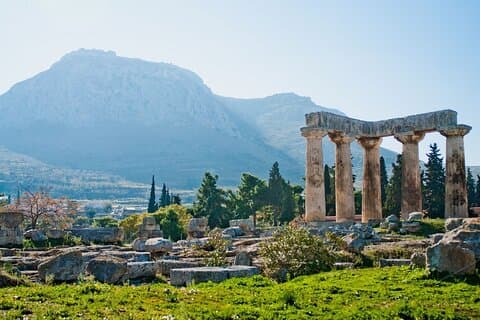
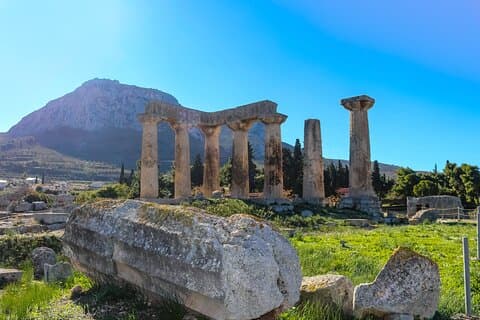
The tour starts with a convenient pickup and takes you via Corinth Canal to Peloponnese. We drive via Mount Parnon to Mount Taygetus. Visit Mystars Byzantine town. Highlights the Palace of Constantine Palaiologos. Next to Sparta, visit town, the impressive statue of Leonidas, the Acropolis, theater, King Leonidas Tomb and Museum. Optional visit: the unique Olive & Oil museum of Sparta and taste local products.
ell as the Peloponnese peninsula with the central part of Greece. More than 2500 workers digging 6.400m for twelve years (from 1881 to 1893). Stop for photography, walk across on a pedestrian bridge and admire the canal from 80 m high
ese, famously dubbed the "wonder of the Morea". Situated on the slopes of Mount Taygetos near ancient Sparta, it served as the brilliant capital of the Byzantine Despotate of the Morea during the 14th and 15th centuries. Today, it is an inscribed UNESCO World Heritage Site and stands as one of Greece's most profound historical treasures. Tickets 20€ for summer or 10€ for winter (Ticket Includes Museum and Palace)
Visitors can finally tour the fully restored, evocative interior halls of the Byzantine rulers. The Castle (Kastro): The fortress crowning the peak, originally erected in 1249 by Frankish Prince William II of Villehardouin. It offers commanding views over the Eurotas valley. Agia Sofia: The elegant 14th-century palace church located in the Upper City, featuring beautiful brickwork and structural architecture. Monastery of Pantanassa: The only still-inhabited building on the site, managed by a community of welcoming nuns. It features stunning, well-preserved Late Byzantine frescoes. Metropolis (Cathedral of Agios Dimitrios): The oldest church here, built in 1291. It houses a small museum and features the marble floor slab where Constantine XI Palaiologos—the last Byzantine emperor—was crowned
duced by the almost mythical figure of Lycurgus. He configured the entire society in order to maximize military proficiency at all costs, focusing all social institutions on military training and physical development. Its inhabitants were classified as Spartiates (Spartan citizens with full rights), mothakes (non-Spartan free men raised as Spartans), perioikoi (free residents engaged in commerce), and helots (state-owned serfs, enslaved non-Spartan local population). Sparta Archaeological Museum is closed every Tuesday.
Its neoclassical building was constructed between 1874 and 1876 in the center of the city and it has been declared a listed building for its architectural and historical interest. Every Tuesday Museum is closed Ticket general 10€
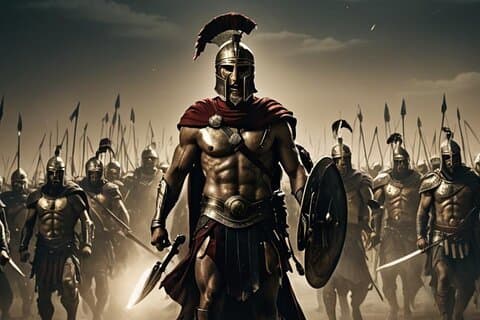
When the Persians attacked at Thermopylae and told the Spartans and their allies to lay down their weapons, Leonidas' response, immortalized beneath his feet, was 'Molon labe' ('Come and get them'). Excavations carried out during the previous century, north of the modern town of Sparta, brought to light an impressive construction. The edifice that dates back to the 5th century B.C. was made from large limestone. Archaeologist who carried out the excavations in 1892, initially thought it was a small temple. Although its use is not yet verified, it is believed to be the tomb of Leonidas. According to Pausanias, it was here that the remains of the legendary king of Sparta were transferred and buried after the battle in Thermopylae. The tomb of Leonidas is the only preserved monument of the Ancient Agora.
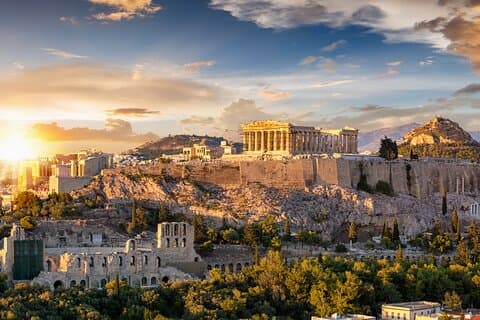
Suppose the city of Sparta to be deserted, and nothing left but the temples and the ground-plan, distant ages would be very unwilling to believe that the power of the Lacedaemonians was at all equal to their fame. Their city is not built continuously, and has no splendid temples or other edifices it rather resembles a group of villages and would therefore make a poor show. We visit The Acropolis and the Ancient Theater of Sparta. Built of local white marble during the Roman period, the late first-century B.C theater was one of the Classical world’s largest. Said to be capable of holding an estimated 16,000 people, it featured a mobile stage and was considered a tourist destination in ancient times. Much of the auditorium was destroyed during the Byzantine period, and the remaining marble and limestone blocks have suffered from erosion.
transports you to the culture, history and technology of the olive and olive oil production in the Greek realm, from prehistoric times to the early 20th century. The olive and olive oil are presented here from different optical angles: the economy, nutrition and the olive's uses, religious worship, art and technology. The Museum of the Olive and Greek Olive Oil offers you the opportunity to see the very first testimonies about the presence of the olive tree and the production of olive oil in Greece: Rare fossilized olive leaves, 50,000-60,000 years old, from the island of Santorini, the oldest findings offering proof of the presence of the olive tree en Greece Linear B Tablets of the 14th century BC (exact replicas), with the first written testimonies about the olive and olive oil. Visit is optional and depends time. Every Tuesday Museum is closed. General Ticket 5€
For Private Tours: Traveler pickup/drop off is offered from/to your hotel/apartment in/ from Athens center up to 7 km, at the arranged time of your tour departure or your tour return.
We recommend that the tour starts at 8.00 am or earlier in winter time If for any reason this is not convenient, you can adjust the time according to your needs.
1) Additional charge is applicable *15€ per way from longer pickup/drop off locations, more than 7 km from Athens city center. *Piraeus Port (distance 12km), *Piraeus Cruise Terminal (Distance 13km) This charge does not Include: **Airport (distance 36km) or **Lavrio Port (distance 75km) **This is under prior agreement with the agent's office
2) Traveler pickup/ drop off is offered from/ to your hotel/ apartment/ port in Nafplio. In that option, the cost change accordingly to lower, as Sparta Acropolis & Corinth are closer to Nafplio. Please see corresponding price
For a full refund, cancel at least 24 hours before the scheduled departure time.
Durchsuche Athens nach Kategorie - Skip-the-Line-Tickets, Stadtrundgänge, Tagesausflüge, Fooderlebnisse und mehr