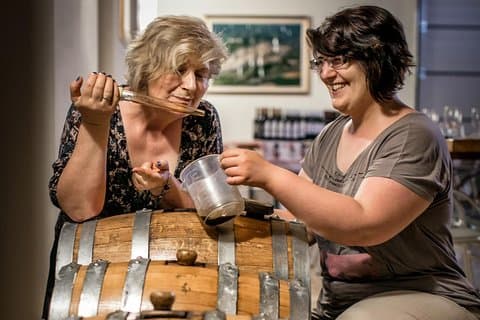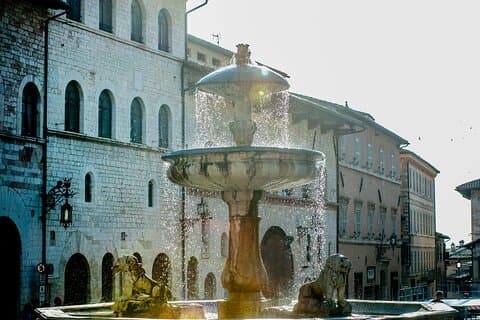
If you're looking for a fun and curious way to visit Assisi, you've come to the right place! With this digital guide created with the support of a local, you will be able to visit all the most important monuments at your own pace.
You'll get to know the stories and curiosities of Assisi! But also you will discover everything about local foods, Italian Aperitivo in authentic local restaurants, and much more!
Piazza Santa Chiara 1, Assisi, Italy
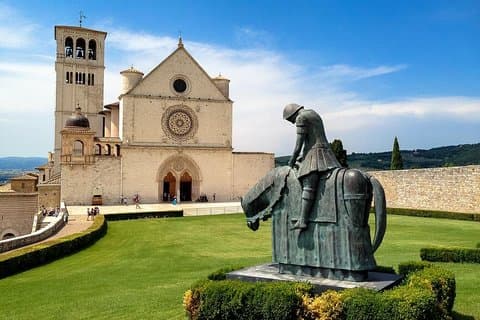
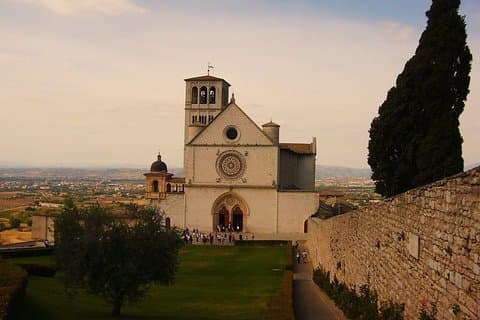
The Basilica of Santa Chiara was built on the opposite hill to the Basilica of San Francesco. The two basilicas, with facades inspired by the Romanesque model, seem to dialogue through their simplicity. Both have a triangular tympanum and a central rose window that symbolizes a spiritual embrace towards the pilgrims who pass through the streets of Assisi.
Piazza San Rufino 3, Assisi, Italy
The Diocesan Museum and Crypt of San Rufino is located in Assisi, next to the Cathedral of San Rufino, and is a space rich in history and sacred art. The museum is housed in medieval rooms, including decorated rooms and ancient cloisters. Inside, sacred works of art from the cathedral and churches in the area are exhibited.
In 1615, the Friars Minor, thanks to the financial support of Philip III, King of Spain, transformed this space into a church, starting community life and liturgical celebrations.
cca Maggiore and the Rocca Minore, also known as Cassero di Sant’Antonio. Both are made with the typical pink stone of Assisi.
Piazza del Comune, Centro storico, Assisi, Italy
All the main roads leading from the city gates converge in this square. The square was built on an ancient Roman Forum used as a public space and center of political and social activities. In the Middle Ages, the main public buildings arose, such as the Temple of Minerva, the first seat of the Municipality of Assisi, the Palazzo del Capitano del Popolo and the Torre del Popolo.
Piazza del Comune 25, Assisi, Italy
Built at the end of the 13th century, the palace was designed as the seat of the Capitano del Popolo, a figure who represented the power of the Municipality of Assisi. The Capitano was responsible for maintaining order and administering justice, a central role in the medieval politics of the city.
ated under the current Piazza del Comune and was discovered thanks to excavations conducted by a French architect in the first half of the 19th century. Today, it is possible to visit it by accessing the crypt of the former Church of San Niccolò, located in Via Portica.
Via San Francesco 11, Assisi, Italy
This place was built in 1457 by order of the brotherhood of Sant’Antonio Abate and San Giacomo, it was created to allow pilgrims hosted in the nearby hospital to participate in religious functions. The interior has a square plan, with a cross vault and frescoed walls.
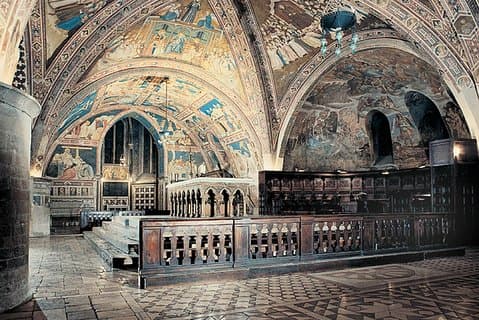
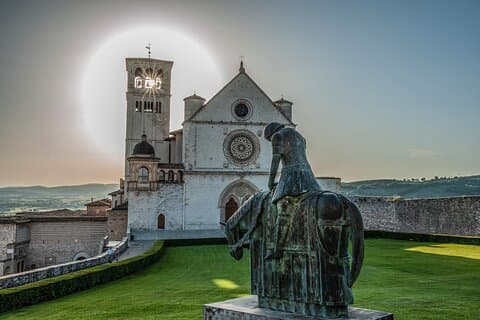
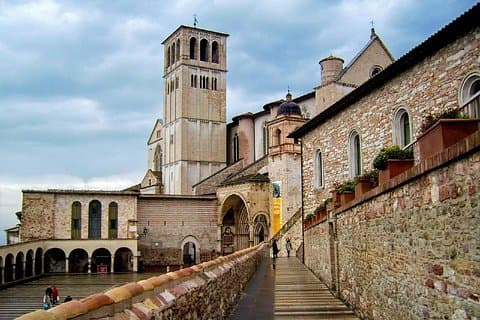
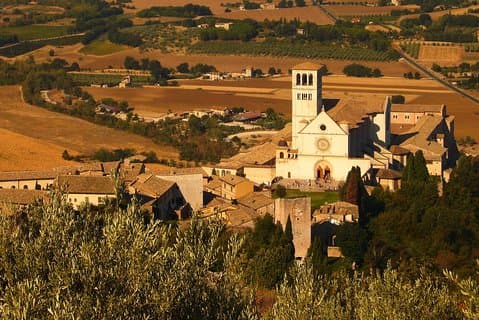
Thus, on July 15, 1228, Pope Gregory IX, a friend of Saint Francis, proclaimed him a saint and, on the same day, laid the first stone of the basilica, which would be built on a hill near Assisi, towards the north. Let's discover this amazing building!
We are going to start here! However, you can access your digital guide even before getting there!
For a full refund, cancel at least 24 hours before the scheduled departure time.
Gennemse Assisi efter kategori - skip-the-line billetter, ture til fods, dagturnéer, madbeskrivelser og meget mere