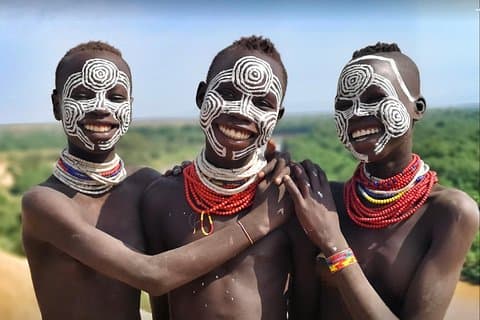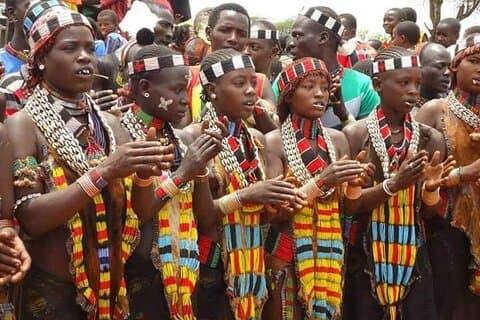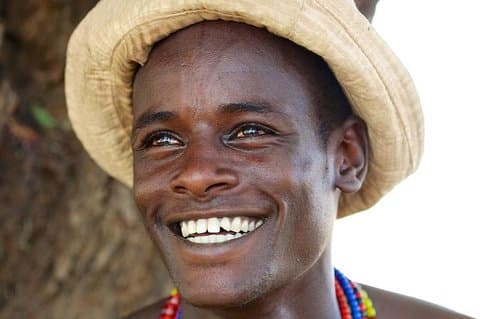
You will meet the Dorze, Ari, Mursi, Bana, Hamer, Dassanach and Tsemay peoples. There'll be chances to try your hand at local crafts such as spinning and weaving and experience colourful village markets whilst also support community tourism projects in Dorze and Konso. You'll explore the natural wonders of the Rift Valley lakes, including hippos and crocodiles and see the UNESCO World Heritage Sites of Tiya and the Konso Cultural Landscape.
urches and the Mercato, reputedly the largest market in Africa.
n year old skeleton whose discovery in 1974 demonstrated that bipedal hominids evolved much earlier than previously thought. The museum also holds many other palaeontological and archaeological artefacts, as well as ethnographic and modern art displays.
thedral is an important focal point for the Ethiopian Orthodox church. As a place of worship, it is considered second only to the Church of Our Lady Zion in Axum (where the original Ark of the Covenant is believed to be held).
A close-knit grid of streets crammed with stalls, kiosks and shops, you can buy virtually anything here, but be prepared to negotiate!
ira, stopping on the way at the mysterious stone stellae field of Tiya. Now a UNESCO World Heritage site, nobody really knows who carved the stellae, or the meaning of their mysterious symbols.
Minch, where you will stop for the night.
dile market" - a stretch of sand where enormous Nile Crocodiles like to warm up in the sunshine. Sightings of hippos are also common on the lake.
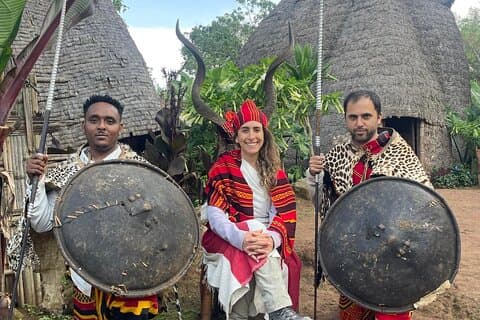
The Dorze people are famous for their skill as weavers and on a tour round the village, you will see some of their products. Even their houses are woven from bamboo. You can try your hand at spinning thread, and find out some of their many uses of the enset (false banana) plant. From there, you'll return to your hotel in Arba Minch, where you'll stay a second night.
The Konso Cultural Landscape, which includes 42 villages and surrounding farmland, is designated as a UNESCO World Heritage site. There are around 250,000 people living in this area, mostly in hill-top villages surrounded by high stone walls. Konso farmers use a sophisticated system of stone terracing to retain moisture and prevent erosion of the hillsides. The area is also famous for the waka (carved wooden funerary statues) that dot the landscape. The Konso people are thought to have lived in this area for at least 400 years and they speak a language belonging to the Cushtic family.
the Tsemai people, who live around the Woito River. The Tsemai practice slash-and-burn agriculture, as well as animal husbandry. The spiritual leader of the Tsemai is the bogolko, who prays for rain, good harvests and the health of children. The Tsemai are considered as magicians by some people in surrounding urban areas, but they are also known as one of the most peaceful peoples among the ethnic groups of the Omo Valley.
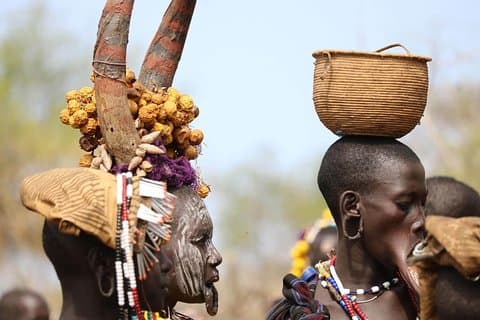
o live in an almost inaccessible area between the Mago and Omo rivers, and are famous for the clay lip-plates traditionally worn by women. There's controversy over the origins of the lip-plates, with theories ranging from disfigurement to discourage slave-raiders to a sign of beauty. Both men and women practise scarification and cut their hair very short, often with patterns shaved into it. Men traditionally wear only a blanket tied at one shoulder, and women, a similarly-fashioned goat skin. The Mursi have a reputation for being aggressive and the men carry a Donga (large stick) for fighting. Ceremonial fights are also performed. Cattle are the Mursi's most prized possession. They're used in virtually every social relationship, including in marriage, as a dowry paid to the bride's father. They provide milk and blood, which form an integral part of the Mursi diet.
The Ari people, who live in the fertile lands surrounding Jinka, predominantly practice settled agriculture and produce a variety of cereals, pulses, root crops, fruit and vegetables, as well as the cash crops coffee and cardamom. In rural areas, you may still see Ari women wearing traditional dresses made from the leaves of the false banana plant, and draped with colourful beads and bracelets. At the end of the day, you'll return to Jinka, where you'll spend a second night.
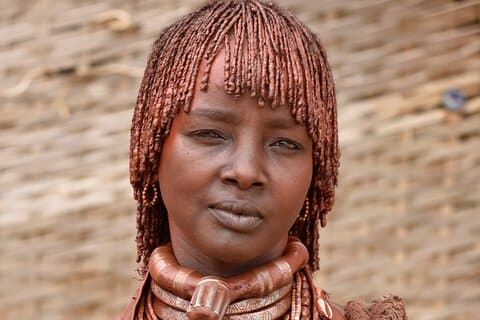
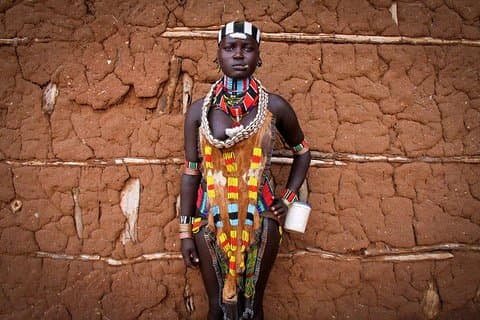
In the morning, you will stop off either at a local market (if it is Tuesday or Saturday) or at a Bana village. In the afternoon, you'll either visit a traditional Hamer village or, if you are lucky, witness the Hamar's famous bull-jumping ceremony, which takes place when a Hamar man comes of age. He must successfully leap over a line of 8-20 cattle 4 times if he is to be allowed to marry, have children, and own cattle of his own. In the village, Hamer women wear elaborately decorated goat skins with beaded necklaces, bracelets and waistbands, usually black and red, with the number and type of necklaces worn denoting their marital status. Women decorate their hair with clay and butter and twist it into small braids. Men wear a clay cap which is painted and decorated with feathers and other ornaments. Overnight at a hotel in Turmei.
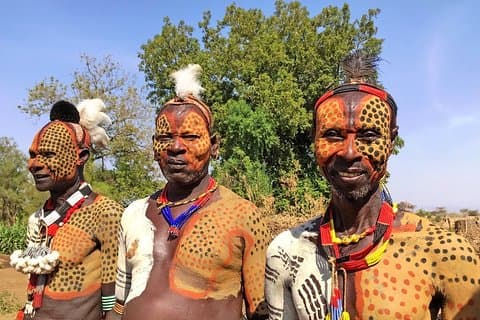
The Dassanech tribe, living around Omerate, is not strictly defined by ethnicity but has absorbed a wide range of different people over time. The Dassanech are divided into eight main clans, each of which is believed to have special powers over different things such as water, crocodiles, snakes, diseases, drought, eye infections, scorpion bites and muscular problems. Members of the same clan are forbidden from marrying (or even dancing with) each other. Both men and women of the Dassanech adorn themselves with beads and bracelets.
or visit the Hamar village if you saw the bull-jumping ceremony on the previous day. At the end of the day, you'll return to Turmei, where you'll spend a second night.
The roadsides are often lined with villagers selling fresh, seasonal fruits. Your final destination for the day will be Hawassa, a pleasant lakeside town where you will spend the night. Views over the lake at sunset can be spectacular.
National Park, where flocks of up to 50,000 flamingos gather.
see traditional dances from around the country while sampling various Ethiopian dishes.
Customers can meet us at our office which is within the compound of the Taitu Hotel, or we can pick up customers from any hotel within 6km of the Taitu Hotel.
If you cancel at least 3 full day(s) before the scheduled departure time, you will receive a full refund.<br>If you cancel within 3 day(s) of the scheduled departure, you will receive a 0% refund.
Gennemse Addis Ababa efter kategori - skip-the-line billetter, gå-ture, dagsture, madoplevelser og meget mere