AthensListicleDay tripsFoodAncient sites
Things to Do in Athens: 24 Experiences Worth Booking in 2026
A 2026 Athens shortlist - 24 experiences across the ancient core, neighbourhoods, food tours, and day trips, grouped by what is actually worth booking ahead.
By SimilarTours Editorial · Travel Research · · 16 min read

Athens rewards a plan. The ancient core is compact enough to walk in a morning, but the moment you widen the frame - the museums, the market food, the hills at sunset, the temples and islands a short drive out - the list of things worth doing outgrows almost any short stay. Most travellers arrive with a single sight in mind and leave wishing they had booked one more day trip.
This guide cuts the list to 24 experiences worth booking, grouped so you can pull the right block depending on whether you are here for the ancient sites, the neighbourhoods, the food, the views, or a day out of the city. Each entry is framing rather than a history lesson - what the experience is, who it suits, and whether it is worth booking ahead.
We compared the Athens experiences currently bookable across our partner OTAs to shape this shortlist, so the themes below track what travellers actually book rather than a generic sightseeing checklist. Live prices, ratings, and availability sit in the carousels, which pull real catalogue results at page load - final cost depends on date, group size, language, and any add-ons chosen at checkout.
Browse all Athens experiences and tickets →The ancient core
Start here. This tight cluster of sites is the reason most people come to Athens, and you can cover the headline ones on foot in a day.
1. The Acropolis and the Parthenon
The single most-booked experience in Athens, and the one sight nobody skips. The rock rises over the whole city, and the walk up passes a run of ancient monuments before the Parthenon opens out at the top. It is also the site where a timed, skip-the-line ticket or a guided tour pays off most - the midday queues and crowds are the worst part of an otherwise unmissable morning. A guide adds the story the bare ruins do not tell you. For a full breakdown of every ticket type and when each is worth it, see our Acropolis tickets guide.
Top Acropolis skip-the-line tickets and tours

Best of Athens in one day private tour & Acropolis skip the line
5.0(58)8 hoursViewFrom$189
Acropolis Museum Tickets
4.5(10,771)ViewFrom$30
Athens: Acropolis, Parthenon and Acropolis Museum Guided Tour
4.8(2,452)2 hours - 4 hoursViewFrom$40
Athens Multipass Tickets: Acropolis Tickets + 5 Archaeological Sites Tickets with Audio Guide
4.7(8,169)ViewFrom$156
Acropolis and Parthenon Guided Walking Tour
4.8(6,506)2 hoursViewFrom$40
Altes Museum Skip-the-Line Tickets
4.5(4)ViewFrom$17
Acropolis monuments & Parthenon Walking Tour with Optional Acropolis Museum
4.9(3,238)4 hoursViewFrom$40
Acropolis Museum Entry Tickets with Self-Guided Audio Tour
4.2(2,426)ViewFrom$35
Acropolis of Athens and Acropolis Museum Tour
4.7(972)3 hr 30 minViewFrom$55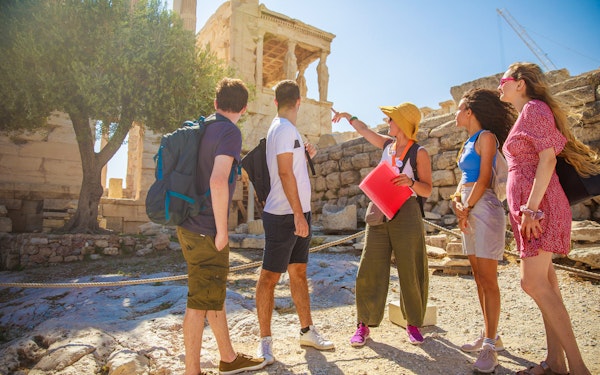
Combo Guided Tour: Acropolis + Acropolis Museum + Temple of Poseidon with All Entry Tickets
4.3(888)10 hoursViewFrom$203
2. The Acropolis Museum
The natural companion to the rock itself, at the foot of the southern slope. Where the site up top is open sky and marble, the museum is where the surviving sculpture and detail live, laid out so you can read what you just walked past. Most people do the two together - the hill in the cooler morning, the museum after - and a combined visit makes far more sense of the Acropolis than either half alone.
3. The Ancient Agora
The old civic heart below the Acropolis, a green, walkable spread of ruins and pathways where the day-to-day life of the ancient city played out. It is quieter and shadier than the rock above it, with a strikingly well-kept temple on one side and a reconstructed colonnade housing a small museum. A good second stop once you have done the Acropolis, and an easy self-guided wander if you would rather not book a tour.
4. The Temple of Olympian Zeus and Hadrian's Arch
A short walk from the centre, a cluster of towering columns standing alone in an open field, with a ceremonial arch marking the edge of the old city nearby. It is a quick stop rather than a half-day, but the scale of what remains is worth the short detour, and it slots neatly between the centre and the Panathenaic Stadium. The best light here is early or late, when the columns throw long shadows across the grass and the crowds thin, and you can loop it into a walk that ends at the stadium or the National Garden without doubling back.
5. The Roman Agora and the Tower of the Winds
The later civic square, tucked at the edge of Plaka, with an elegant octagonal tower as its centrepiece. It is small and easy to fold into a Plaka wander - the kind of place you pass through rather than plan a whole visit around, but a rewarding one for anyone who wants the fuller picture of the ancient city beyond the headline sites.
6. The Panathenaic Stadium
The gleaming marble stadium a short walk east of the centre, set into a fold in the hills. You can walk the track, climb the tiers for a view back over the city, and it photographs beautifully in low light. A quick, uncomplicated stop that pairs well with the nearby National Garden and the temple columns, and one of the few big sights in the centre you can enjoy in a few unhurried minutes rather than a full visit.
Neighbourhoods to wander
Athens is a walking city, and some of the best hours here are unstructured ones spent drifting through its oldest quarters.
7. Plaka
The oldest neighbourhood in the city, a warren of narrow lanes climbing the slopes below the Acropolis, thick with tavernas, small shops, and cafe terraces. It is touristy and knows it, but the atmosphere is genuine and the setting is hard to beat. The best approach is to give yourself an unhurried evening here with no fixed plan and let the streets lead.
8. Monastiraki and its flea market
The buzzing square and market district where the old city meets the modern one, with a sprawling weekend flea market, street food, and rooftop bars looking straight at the Acropolis. It is the liveliest corner of central Athens and the natural place to end a day - browse the stalls, then find a terrace for the floodlit view after dark.
9. Anafiotika
The tiny, whitewashed pocket of island-style houses tucked into the north slope of the Acropolis, more Cycladic village than mainland city. It is a handful of stepped lanes rather than a full district, easy to miss and easier to love, and it makes a lovely detour off the top of a Plaka walk.
10. Psyrri
The former workshop quarter turned nightlife and street-art hub, a short walk from Monastiraki. By day it is murals and mezes; by night it fills with bars, tavernas, and live music. It is where a lot of the food tours pass through, and a good place to base an evening once you have done the daytime sights.
See all Athens guided walking tours →Museums worth your time
Beyond the Acropolis Museum, Athens holds a couple of collections that reward a slower half-day - and they are the natural fallback when the sun is high and the open sites are baking.
11. The National Archaeological Museum
The country's flagship collection, a short ride north of the centre, and one of the great museums of the ancient world. It is large, so it rewards either a focused visit around the headline pieces or a guided route that keeps you moving through the highlights. A strong pick for a hotter afternoon when the outdoor sites are baking.
12. The Benaki and Cycladic museums
Two smaller, more manageable collections near the centre - one sweeping across Greek culture through the ages, the other focused on the clean, minimalist figures of the early island cultures. Either makes a satisfying two-hour visit, and both are far quieter than the big-name sites. Good rainy-day or slow-morning options.
Hills and views
Athens is a city of hills, and two of them deliver the sunsets people remember most.
13. Lycabettus Hill
The highest point in the city, reached by a funicular or a stiff walk, with a chapel and a terrace at the summit and a full panorama below - the Acropolis on one side, the sea in the distance. It is the classic Athens sunset spot; go up before dusk, watch the city lights come on, and come down for dinner.
14. Filopappou Hill
The lower, greener hill opposite the Acropolis, laced with stone paths through pine and offering the postcard side-on view of the rock. It is free, uncrowded, and the pick for anyone who wants the Acropolis in their sunset frame rather than a distant skyline. An easy, unticketed walk to end a day.
Food and markets
Athens eats well and cheaply, and a tour early in your stay pays off for every meal after.
15. An Athens food tour around the Central Market
A guided crawl through the bustling Central Market and the streets around it, tasting your way across cheeses, olives, cured meats, sweets, and small plates with a local guide to explain what you are eating. It is the single most useful thing to book early - you leave knowing what to order and where for the rest of the trip.
Top Athens food tours

Athens Food Tour
5.0(52)4 hoursViewFrom$104
Classic Athens Food Tour with Local Drink & Market Visit
5.0(67)3 hours - 4 hoursViewFrom$70
Greek Food Walking Tour in Athens
5.0(5,606)3 hr 30 minViewFrom$84
Athens Evening Food Tour
4.9(961)3 hoursViewFrom$94
Private Flavors of Athens Food Tour
5.0(71)4 hoursViewFrom$244
Small Group Greek Traditional Food Tour in Athens 20+ Tastings
5.0(2,047)3 hr 30 minViewFrom$85
The Greek Food Experience (Max 8 persons)
5.0(218)4 hoursViewFrom$128
Athens Full Day Private Tour
5.0(1,161)8 hoursViewFrom$181
Athens Street Food Tour
4.5(1,562)2 hr 30 minViewFrom$66
Athens Acropolis and Parthenon Walking Tour
4.6(1,441)2 hoursViewFrom$36
16. A Greek cooking class
A hands-on session in a working kitchen, often starting with a market walk, where you cook a spread of Greek staples and then sit down to eat what you made. It runs a few hours, suits couples and families, and works best as an evening that doubles as dinner rather than something that competes with your daytime sightseeing.
17. A street-food tour
The lighter, faster cousin of the market tour - souvlaki, gyros, bougatsa, and koulouri eaten on the move through Psyrri and the centre. It is the best introduction to how Athens actually snacks, and an easy, inexpensive way to fill an evening without committing to a sit-down meal.
See all Athens food and drink experiences →Unique ways to see the city
A few experiences reframe the sights you have already walked past.
18. A mythology walking tour
A guided walk that threads the ancient sites together through the myths attached to them, turning a run of ruins into a set of stories. It is the pick for anyone who found the bare sites hard to read, and a favourite with families travelling with older kids. The gods, the heroes, and the founding legends make far more of the stones than a map ever will.
Top Athens mythology walking tours

Athens Tour In 5 hours by a local
5.0(45)5 hoursViewFrom$163
Athens & Acropolis Highlights: Greek Mythology Small-Group Tour
4.8(2,492)4 hoursViewFrom$53
Hills Of Athens Walking Tour
5.0(32)4 hours - 5 hoursViewFrom$51Acropolis and Parthenon Guided Walking Tour
4.8(6,506)2 hoursViewFrom$40
Athens Acropolis Highlights with Lunch
5.0(1)6 hoursViewFrom$765Athens Acropolis and Parthenon Walking Tour
4.6(1,441)2 hoursViewFrom$36
Private Luxury Tour: Athens Acropolis & Iconic City Highlights
5.0(63)4 hours - 5 hoursViewFrom$152
Athens: Guided Mythology Walking Tour Acropolis View
4.5(16)2 hoursViewFrom$41
Private 4-hour Jewish Walking Tour in Athens
4 hoursViewFrom$315Acropolis monuments & Parthenon Walking Tour with Optional Acropolis Museum
4.9(3,238)4 hoursViewFrom$40
19. The Acropolis and the old city after dark
An evening guided walk through the floodlit centre, with the Acropolis lit above and the crowds of the day long gone. It is a cooler, calmer, more atmospheric way to see the ancient core in summer, and it pairs naturally with dinner in Plaka or a rooftop drink in Monastiraki afterwards.
20. The changing of the guard at Syntagma
The ceremonial guard change in front of the parliament on the main square, performed in traditional dress with a slow, deliberate drill. It is short, free, and central, and it makes an easy pause between the centre and the National Garden. Worth timing your walk to catch on the hour.
Day trips worth leaving for
Some of the best experiences near Athens are a drive or a short sail away, and they are the reason to add a third day.
21. Cape Sounion at sunset
The easiest big-payoff trip from the city - a scenic coastal drive south to a clifftop temple above the Aegean, timed so you are there as the sun drops into the sea. It is a half-day rather than a full one, usually a late-afternoon departure, and the single most photogenic evening you can have near Athens.
Top Cape Sounion sunset tours

Sunset Private Tour to Cape Sounio, Temple of Poseidon
5.0(48)4 hoursViewFrom$142
Private Sunset Afternoon Tour in Sounio
5.0(1)5 hoursViewFrom$390
Cape Sounion and Temple of Poseidon Half-Day Small-Group Tour from Athens
4.7(3,673)5 hours - 6 hoursViewFrom$42
Sunset at Cape Sounio & Temple of Poseidon Private Tour
5.0(1)4 hoursViewFrom$250
Temple of Poseidon and Cape Sounion Sunset Tour with Audio Guide
4.4(680)5 hoursViewFrom$33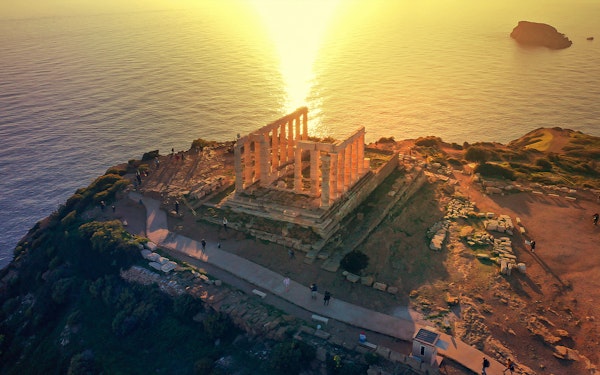
Cape Sounion & Temple of Poseidon Guided Sunset Tour
4.5(1,948)5 hoursViewFrom$30
Athens: Cape Sounion and Poseidon Temple Sunset with Audio Guide
4.6(430)5 hoursViewFrom$33
Athens Temple of Poseidon and Cape Sounion Half-Day Small-Group
4.9(351)5 hours - 6 hoursViewFrom$35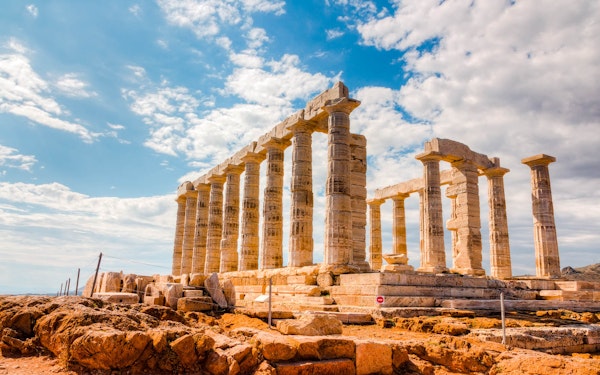
Guided Tour of Temple of Poseidon & Cape Sounion from Athens
4.4(79)5 hoursViewFrom$56
Cape Sounion & Temple of Poseidon Sunset Experience
3.9(224)4 hoursViewFrom$33
22. Delphi
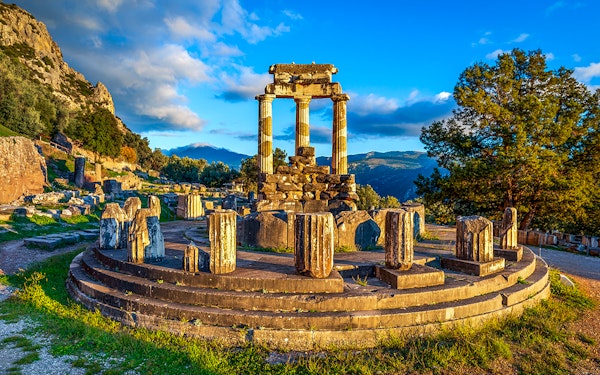
The classic full-day ancient-sites trip, a mountain drive northwest to a dramatic terraced sanctuary and its museum, set into a steep hillside above a valley of olive groves. It is a long but rewarding day, best done with a guide who can make sense of the layered ruins, and the strongest single choice for travellers who want more ancient history beyond the city.
Top Delphi day trips from Athens
From Athens: Delphi & Arachova Day Trip with Expert Guide & Transfers
4.6(98)10 hoursViewFrom$68
Delphi Guided Small Group Day Tour from Athens
4.7(542)9 hoursViewFrom$105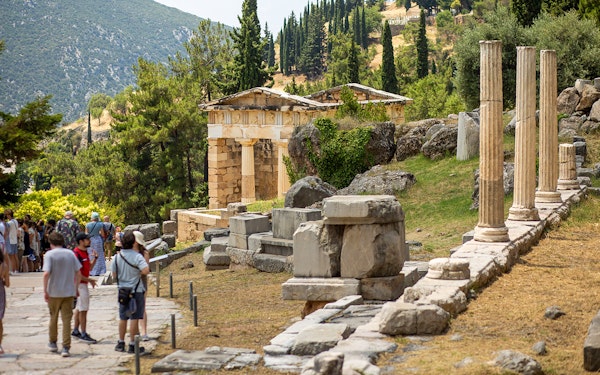
From Athens: Delphi Archaeological Site & Museum Day Trip
4.5(2,093)10 hoursViewFrom$29
From Athens: Small-Group Delphi, Museum & Arachova Day Trip
4.7(325)10 hoursViewFrom$46
Mercedes Private Tour to Delphi and Arachova
5.0(34)8 hoursViewFrom$248
Delphi Full Day Private Tour from Athens
4.9(458)8 hours - 9 hoursViewFrom$222
Delphi Tour from Volos
7 hours - 9 hoursViewFrom$945
Delphi and Meteora Private Day Trip from Athens including Dinner
4.9(252)14 hoursViewFrom$245
Delphi, Trip to the "Center of the Ancient World"
4.8(6)9 hours - 10 hoursViewFrom$198
Delphi Private Day Tour from Athens
5.0(175)8 hours - 9 hoursViewFrom$234
23. Nafplio and the Argolis
A full-day loop into the Peloponnese taking in a handsome seaside town and a run of major ancient sites, including a famous citadel and a vast, acoustically perfect open-air theatre. It packs several headline stops into one day and suits history-minded travellers who want depth over coastline. The town itself makes a graceful lunch stop between the ruins.
24. A Saronic islands cruise
A relaxed day at sea to a trio of nearby islands, with time ashore to wander harbour villages, swim, and eat by the water before sailing back. It is the least demanding of the big day trips - no long coach ride, just the sea and a string of ports - and the best option for anyone who wants a taste of the Greek islands without leaving an Athens base.
Top Athens islands day cruises

Daily cruises to Dia Island with All -Inclusive Meal and drinks
4.8(39)5 hr 30 minViewFrom$77
Full Day Boat Cruise to 3 Islands with optional pickup
4.5(631)8 hoursViewFrom$35
From Athens: Agistri, Moni & Aegina Islands Full-Day Cruise with Meals & Drinks
4.3(111)10 hoursViewFrom$146
Athens Day Cruise: 3 Islands Tour in the Saronic Gulf with Lunch
4.6(1,324)10 hoursViewFrom$158
From Athens: Day Cruise to Greek Islands of Agistri, Moni & Aegina with Lunch
4.5(406)10 hoursViewFrom$197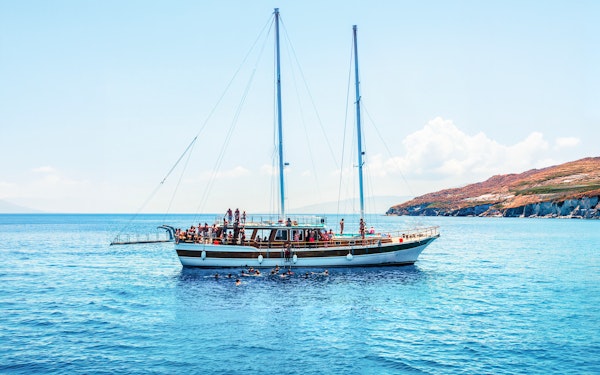
Athens: Full-Day Island Hopping Cruise Tickets with Lunch & Swimming
4.5(53)11 hoursViewFrom$185
All Day Cruise -3 Islands to Agistri,Moni, Aegina with lunch and drinks included
4.9(6,217)10 hoursViewFrom$157
From Athens: Hydra, Poros & Aegina Islands Full-Day Cruise with Buffet Lunch
4.5(1,948)12 hoursViewFrom$163
Athens Private Transfer: Central Athens to Piraeus Cruise Port
4.4(190)30 minutesViewFrom$39
From Athens: Metopi, Agistri & Aegina Islands Full-Day Cruise with Lunch & Drinks
4.5(210)9 hoursViewFrom$103
How to pick from this list, fast
- One day in Athens: the Acropolis in the cooler morning, the Acropolis Museum after, then Plaka and Monastiraki in the evening
- Two days: add the Ancient Agora, the National Archaeological Museum, a food tour, and sunset from Lycabettus or Filopappou
- Three days: add one big day trip - Cape Sounion at sunset, Delphi, or a Saronic islands cruise
- Four days: add a cooking class, a mythology walk, and either the Argolis loop or a slower pass through the museums and hills
Common questions
What are the top 10 things to do in Athens?
If you only have time for the headline experiences, the top ten are the Acropolis and Parthenon, the Acropolis Museum, the Ancient Agora, a wander through Plaka and Monastiraki, the National Archaeological Museum, a food or street-food tour around the Central Market, sunset from Lycabettus or Filopappou Hill, a Cape Sounion sunset trip, a Delphi day trip, and a Saronic islands cruise. The Acropolis is the one experience worth booking timed, skip-the-line entry for; most of the rest reward seeing on foot or on a small-group tour.
How many days do I need in Athens?
Two full days covers the ancient core and the main neighbourhoods without rushing - the Acropolis and its museum on day one, the Agora, Plaka, and a food tour on day two. A third day lets you add one big day trip, whether that is Cape Sounion at sunset, Delphi, or a Saronic islands cruise. Four days is comfortable if you want both a day trip and a slower pace around the museums and hills.
Is the Acropolis worth booking a tour or ticket for in advance?
Yes, especially between spring and autumn. The Acropolis draws large midday crowds and long entry queues, so a timed, skip-the-line ticket or a guided tour saves the most frustrating part of the day. A guide also adds the context that the site itself gives you almost none of. Our separate Acropolis tickets guide breaks down every ticket type and when each is worth it.
What is the best day trip from Athens if I only pick one?
Cape Sounion at sunset is the easiest big-payoff choice - a short coastal drive to a clifftop temple, timed so you watch the sun drop into the Aegean. If you want ancient sites over coastline, Delphi is the classic full-day pick, and the Argolis route toward Nafplio, Mycenae, and Epidaurus is the strongest history-heavy alternative. For sea and island villages, a Saronic cruise to Hydra, Poros, and Aegina is the most relaxed option.
Are Athens food tours worth booking?
Yes, particularly early in a trip. A food or street-food tour around the Central Market and Psyrri is the fastest way to learn what to order for the rest of your stay, from souvlaki and bougatsa to mezes and Greek wine. Most run a few hours across several tasting stops and replace a meal, so treat them as a walking lunch or an early dinner rather than an add-on.
What is the best area to stay in Athens for sightseeing?
Plaka, Monastiraki, and Koukaki keep you within walking distance of the Acropolis, the Acropolis Museum, and most of the ancient core, which is the reason most first-time visitors base themselves there. Syntagma is slightly more business-like but sits on the metro and puts you a short walk from the same sights. Wherever you stay, the historic centre is compact enough that you will spend most of your time on foot.
How do I get around Athens?
The historic centre is walkable end to end, and the ancient sites cluster together closely enough that most people barely use transport during the day. For longer hops, the metro is fast, cheap, and connects Syntagma, Monastiraki, and the airport. Day trips to Cape Sounion, Delphi, and the Argolis are easiest as organised tours with transport included, and the Saronic islands are reached by cruise or fast ferry from the port.
When is the best time to visit Athens?
Spring and autumn are the sweet spots - comfortable walking weather, clear light on the marble, and thinner crowds than the peak summer weeks. Midsummer is hot and busy, so if you visit then, book the Acropolis for early morning or late afternoon and save the hills and sea trips for the cooler ends of the day. Winter is quiet and mild, with short queues, though some day-trip schedules thin out.
Can you see the Acropolis and take a day trip in the same visit?
Yes, most short trips pair the two comfortably. A common two-day shape is the Acropolis, Acropolis Museum, and Plaka on the first day, then a full-day trip on the second - Delphi, the Argolis, or a Saronic cruise. If you want both a day trip and a slower look at the museums and neighbourhoods, give yourself three days so you are not sprinting between the ancient core and the coach.
More reads
More guides to help you plan your trip

Acropolis Tickets in 2026: Types, Skip-the-Line, and How to Choose
A 2026 guide to Acropolis tickets - standard entry, skip-the-line, guided tours, and combo passes compared, with a decision matrix for which one to buy.

The Cost of a Guided Walking Tour: What 50 Cities Actually Charge in 2026
We measured the price of every guided walking tour in our cross-platform catalog across 50 cities. The median is $50. The more useful number is how far prices spread inside a single city.

1 Day in London: A Realistic Itinerary That Does Not Waste the Day
One day in London, planned around what actually fits - a walkable route through the centre, the two things worth booking, and the traps that eat an hour each.

1 Day in Paris: The Itinerary That Fits, and the One That Does Not
One day in Paris, planned around real distances - what to book, what to walk, what to skip, and why three museums in a day is the classic mistake.

2 Days in Lisbon: The Itinerary That Handles the Hills
Two days in Lisbon, planned around the terrain rather than the map - what to book, what to walk, and why the second day should leave the city.

2 Days in Tokyo: Two Districts, Done Properly
Two days in Tokyo is enough for two districts and nothing else - and that is the right plan. A day-by-day route, what to book, and what to deliberately skip.

5 Days in Rome: The Itinerary Where the City Finally Opens Up
Five days in Rome is where the checklist ends and the city begins. A day-by-day route with the two day trips worth taking and the mistakes that waste the extra time.

5 Days in Tokyo: How to Use a City With No Centre
Five days in Tokyo, organised by district rather than by sight - a day-by-day plan, the day trip worth taking, and why the fifth day should not be booked.