New YorkTicketsEmpire State BuildingSkip the lineBuying guide
Empire State Building Tickets: The 2026 Guide to Observatory Access and Best Value
A no-fluff 2026 guide to Empire State Building tickets - the 86th-floor vs 102nd-floor decision, sunrise access, express entry, and how to avoid the line.
By SimilarTours Editorial · Travel Research · · 16 min read

The Empire State Building is the definitive Manhattan icon - the one New Yorkers point to when someone from out of town asks what New York looks like. Getting on top of it is a rite of passage for first-time visitors, but the ticketing is less simple than it used to be. There are now multiple deck levels, express lanes, sunrise slots, city pass bundles, and guided walking tour combos all competing for your attention.
This guide cuts through all of it. Here is what the different Empire State Building tickets actually are, who each format suits, and how to pick the right one without overpaying or waiting in a line you could have skipped.
Browse Empire State Building tickets and observatory passes →Which ticket is right for you
Before getting into the full breakdown, here is the fast decision:
| Who you are | What to book |
|---|---|
| First-time visitor, standard visit | 86th-floor entry, pre-booked timed slot |
| Photographer, clear morning available | 86th + 102nd floor combo, early slot |
| Sunrise experience seeker | Sunrise Experience ticket (before the building opens to general visitors) |
| Summer visit or busy weekend | Standard 86th-floor + express pass |
| Covering multiple top attractions | CityPASS or New York Pass |
| Want the neighborhood context | Empire State Building + walking tour combo |
Standard observatory entry: the 86th-floor open-air deck
The 86th-floor open-air observatory is the experience most people picture. You step outside onto an observation terrace that wraps the building, and Manhattan opens up around you in every direction. On a clear day you can pick out Central Park to the north, the Brooklyn and Manhattan Bridges to the south, the Hudson and East Rivers on either side. The scale of the grid is the thing that gets everyone - you expect a view and you get a geography lesson.
Standard entry tickets start at $48 and include the 86th-floor deck. They are available from multiple providers, with differences mainly in what supplementary access or service is included.
Standard Empire State Building observatory tickets

NYC Empire State Building Observation Deck Ticket
The 86th-floor open-air observatory - over 7,200 reviews, the most-booked ESB entry on the platform.
4.4(7,241)ViewFrom$48- tiqets
Empire State Building: Entry Ticket
4.8-star rated timed entry with nearly 3,000 reviews - strong availability and straightforward booking.
4.8(2,864)ViewFrom$48 - musement
Tickets to the Empire State Building Observatory
Musement's observatory entry - verified reviews and direct timed access to the 86th-floor deck.
4.8(23)ViewFrom$48 
360 CHICAGO Observation Deck Admission
3.9(1,252)1 hour - 4 hoursViewFrom$27
Empire State Building Observation Deck Tickets
4.6(4,869)ViewFrom$48
Empire State Building Skip-the-Line Express Tickets
4.6(90)ViewFrom$93
Top of the Rock Observation Deck New York City Ticket
4.3(4,810)1 hourViewFrom$46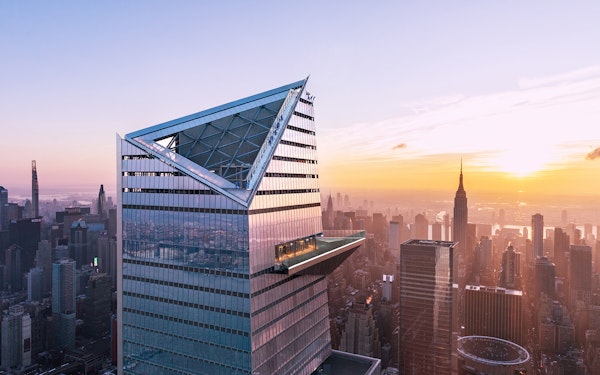
Edge NYC Observation Deck Tickets: Timed Entry, Flexible & Priority Access Options
4.5(6,451)ViewFrom$39
New York Pass: 100+ Things To Do including Empire State Building
4.2(1,382)1 day - 5 daysViewFrom$169
Top of the Rock Observation Deck Tickets
4.6(442)2 hoursViewFrom$46
What is included in standard entry
A standard 86th-floor entry ticket covers:
- Timed access to the lobby and elevator queues for your reserved window
- 86th-floor open-air observatory - the wrap-around terrace with 360-degree views
- Use of the indoor observation lounge on the same floor
- Self-guided visit with no set time limit once you are on the deck
What is NOT included unless explicitly stated:
- 102nd-floor Top Deck access (separate upgrade)
- Express pass / skip-the-standard-queue lane
- A guide or narrated audio tour
- Sunrise access (a separate early-morning product)
Premium access: the 102nd floor and the Sunrise Experience
The 102nd-floor Top Deck
The 102nd-floor observatory is a completely different atmosphere from the 86th. It is glass-enclosed, significantly smaller, and usually much quieter - the numbers allowed up at one time are capped well below the 86th-floor crowds. The view is higher and the Manhattan panorama feels more abstract at this level, almost miniature. It is the pick for photographers who want a clean shot with no crowds in the frame, for anniversary visits, or for anyone who has already done the 86th floor and wants to push further.
Access to the 102nd floor is an add-on or bundled upgrade rather than a standalone ticket.
The Sunrise Experience
The Sunrise Experience is in a category of its own. Access is before the building opens to regular visitors - just a small group on the 86th-floor open-air deck as the sun comes up over the city. The light comes in low and golden, the Manhattan skyline is empty and quiet, and you are essentially alone up there. It is the premium format for the atmosphere, not just the view.
Premium and sunrise observatory access
- tiqets
Empire State Building: Sunrise Experience
Pre-opening sunrise access on the 86th-floor open-air deck - the most atmospheric way to experience the building.
5.0(11)ViewFrom$138 
Empire State Building and Flatiron District Walking Tour
Observatory access paired with a guided Flatiron District walk - the neighborhood context makes the view land differently.
4.8(17)ViewFrom$79Empire State Building Skip-the-Line Express Tickets
4.6(90)ViewFrom$93
NYC Empire State Building Observation Deck Ticket
4.4(7,484)45 minutes - 1 hr 30 minViewFrom$48Empire State Building Observation Deck Tickets
4.6(4,869)ViewFrom$48New York Pass: 100+ Things To Do including Empire State Building
4.2(1,382)1 day - 5 daysViewFrom$169
Private Panoramic Skyline Tour of New York City
4 hoursViewFrom$533
New York: Empire State Building & Hop-on Hop-off Sightseeing Tour
3.3(91)1 hr 30 minViewFrom$105
New York City Private Tour by Plane at Night
5.0(14)45 minutesViewFrom$239
NYC Empire State Building Sunrise Experience + Starbucks Reserve
4.5(98)45 minutes - 1 hr 30 minViewFrom$147
The walking tour option is worth flagging separately. The Flatiron District and the blocks around the Empire State Building have their own story - the interwar architecture, the garment district, Madison Square Park - and a guided walk before or after the observatory turns a standard attraction visit into a real New York neighborhood experience.
Multi-attraction passes that include the Empire State Building
If the Empire State Building is one of several major attractions on your New York list, a city pass can make the math work significantly in your favor. Both the CityPASS and the New York Pass include ESB observatory access as part of a broader package.
New York city passes including Empire State Building
- musement
New York CityPASS - five top attractions
Covers five major New York attractions including the Empire State Building - strong value if you are hitting multiple icons.
4.6(75)ViewFrom$164 
New York Pass: 100+ Things To Do including Empire State Building
The widest-coverage New York pass - over 100 attractions including the Empire State Building observatory.
4.2(1,366)ViewFrom$169Empire State Building Skip-the-Line Express Tickets
4.6(90)ViewFrom$93NYC Empire State Building Observation Deck Ticket
4.4(7,484)45 minutes - 1 hr 30 minViewFrom$48Empire State Building Observation Deck Tickets
4.6(4,869)ViewFrom$48Edge NYC Observation Deck Tickets: Timed Entry, Flexible & Priority Access Options
4.5(6,451)ViewFrom$39
New York CityPASS®
4.3(2,143)9 daysViewFrom$164Top of the Rock Observation Deck Tickets
4.6(442)2 hoursViewFrom$46New York: Empire State Building & Hop-on Hop-off Sightseeing Tour
3.3(91)1 hr 30 minViewFrom$105
New York City Night Skyline Shared Tour from New Jersey
4.7(3)20 minutes - 25 minutesViewFrom$275
When a pass makes sense
A city pass pays off when you are planning to hit four or more major paid attractions in a short visit. The Empire State Building, a ferry experience, the Metropolitan Museum, and Top of the Rock together add up to well over the pass price. If you are only planning to do the ESB and one or two smaller things, individual tickets will almost certainly be cheaper.
Check exactly which attractions are covered and whether those are the ones you actually want before buying - some passes have flexible choices, others are fixed bundles.
Empire State Building vs Top of the Rock
This is the most common comparison question for Manhattan observatory planning, and the honest answer is that they deliver different things.
The Empire State Building is the landmark itself. You are standing on an icon that defined what a skyscraper could look like. The open-air 86th-floor deck is fully exposed to the city on all sides. The building's own presence - the art deco crown, the setbacks, the antenna - is part of the experience when you are inside it.
Top of the Rock at 30 Rockefeller Plaza is where you go to photograph the Empire State Building. The unobstructed south-facing view from Rockefeller Center's observatory frames the Empire State Building perfectly against the Midtown skyline. There are no metal fences blocking the sightlines, and the three-level outdoor terrace offers different compositions depending on how high you go.
If you have time for both: do the Empire State Building for the experience of being in it, and Top of the Rock for the photograph of Manhattan that includes it. If you have time for one: the Empire State Building is the first visit for most travelers; Top of the Rock is the better pick if the skyline photograph is your priority.
Best time of day on the observatory deck
Sunrise is the standout pick if you can get a slot and are willing to set an early alarm. The Sunrise Experience product exists because the demand is real - the light, the quiet, and the solitude on the deck are unlike any other time of day. Regular timed-entry tickets do not cover this window.
Early morning (first general entry) is the next best option for crowds and light. The deck is noticeably less busy than even two hours later, and you get the low-angle morning light before it goes flat.
Sunset is the most popular slot and the most booked. The view as the light leaves the city and the grid starts to glow is genuinely spectacular, but the deck will be at its most crowded. Book sunset well in advance - it sells out first.
Midday on weekdays is the practical sweet spot for first-time visitors who want decent light without sunrise-level commitment. Avoid midday on summer weekends.
Evening after 8 p.m. is an underrated slot. The city at night from the open-air deck is one of the better versions of the view, the crowds have thinned relative to sunset, and the ambient temperature is usually more comfortable in summer than the peak afternoon heat.
How to skip the line
"Skip the line" at the Empire State Building refers to the queue from the lobby to the 86th-floor deck - a multi-stage process involving security, ticketing, and the elevator. In busy periods this queue runs 60 to 90 minutes even for ticket holders.
The practical options:
-
Pre-booked timed entry - the baseline. A timed-entry ticket gives you a specific window and a shorter dedicated queue versus walk-up. This is what most aggregator tickets include.
-
Express pass - a separate or bundled upgrade that moves you into a faster elevator lane and bypasses additional queue stages. Worth it in summer and on busy weekend evenings.
-
Early or off-peak timing - the free route. The line on a weekday morning in January is a fraction of what it is on a Saturday in July. If your schedule is flexible, time selection beats any queue product.
-
Sunrise Experience - zero general-visitor queue by design, since you are arriving before the building opens.
The best free view in Midtown
If you want a sense of what the view is like before committing to a ticket, walk east on 34th Street toward the East River on a clear morning. You will not see the city from the top, but you will see the building from below at a scale that puts the observatory visit in context. It also gives you a reference point for how far the observation deck is above the street - which lands differently in person than in photographs.
Common mistakes to avoid
-
Showing up in summer without a timed ticket. Walk-up availability in July and August is genuinely limited, and even when you can get a same-day ticket the queue from lobby to deck will eat the better part of your morning. Book at least a few days ahead.
-
Confusing the 86th and 102nd floors. Standard entry tickets cover the 86th floor only. If you want the 102nd-floor Top Deck, that is a separate add-on you need to select at booking time - you cannot add it once you are in the building without paying again.
-
Booking a city pass without checking the attraction list. Both CityPASS and the New York Pass include the Empire State Building, but the full list of covered attractions differs. Check every attraction on the pass against what you actually plan to do - the pass only pays off if most of the included attractions are already on your list.
-
Going at noon on a summer weekend. Flat overhead light, the longest queues of the day, and the most crowded deck. If summer is your only option, go at first entry or after 7 p.m.
-
Skipping the express pass for a peak slot. If you have booked a sunset slot in June or July and not added the express pass, budget for a meaningful queue even with timed entry. The express upgrade at that slot is usually worth the cost.
Common questions
What is the difference between the 86th-floor and 102nd-floor ticket?
The 86th-floor open-air deck is the classic observatory - the one you picture when you imagine looking out over Midtown. It is included in every standard entry ticket. The 102nd-floor indoor deck is the top-tier add-on: higher, quieter, glass-enclosed, and sold as an upgrade on top of the 86th-floor admission. Most first-time visitors are satisfied with the 86th floor; the 102nd is the pick for photographers, clear-weather mornings, and travelers who want the most exclusive vantage in the building.
Is the express pass worth it?
In peak season - May through September, weekends year-round, and any evening after 7 p.m. - yes. The standard queue from street to 86th floor can run 60 to 90 minutes in summer; the express lane cuts that to 20-30 minutes. Off-peak, especially on weekday mornings in winter, the standard entry line is short enough that express feels unnecessary. If your visit falls on a summer evening or a Saturday, price the express pass at booking time - the peace of mind is usually worth the difference.
What is the best time of day to visit the Empire State Building?
Sunrise is the quietest and most atmospheric slot - very few visitors are there, the light turns from pink to gold across the Manhattan grid, and the air is cool. Sunset is the most popular time and the most booked, but also the most crowded. Mid-morning on weekdays is the practical sweet spot for most travelers - good light, manageable crowds. Midday in summer on weekends is the worst combination: bright flat light, long lines, and a packed deck.
How long does a visit take?
Allow 60 to 90 minutes for a standard 86th-floor visit - about 20-30 minutes from entry to the deck depending on the line, 30-40 minutes on the observatory itself, then the descent. Add another 20-30 minutes if you are also doing the 102nd floor. With an express pass the whole visit from lobby to street can be done in under an hour, which suits travelers with a tight itinerary.
Empire State Building or Top of the Rock - which should I choose?
They offer genuinely different views. The Empire State Building puts you on an open-air deck on one of Manhattan's most iconic buildings, looking out in every direction including south toward Lower Manhattan and the Statue of Liberty. Top of the Rock at 30 Rockefeller Plaza gives you a clear unobstructed view of the Empire State Building itself in the frame - ideal for that postcard skyline shot. If you can only do one: the Empire State Building for the experience of standing on a landmark; Top of the Rock for the better photo of the Manhattan skyline.
Can I visit both the 86th and 102nd floors on one ticket?
The standard entry ticket covers the 86th-floor observatory only. Access to the 102nd-floor Top Deck is an add-on that you buy at the same time as your main ticket. A small number of ticket packages bundle both floors together at a set combined price, which is worth comparing against the add-on route depending on the provider - compare options on SimilarTours before booking.
Does the Empire State Building sell out?
Timed entry tickets can sell out for popular windows - particularly sunset slots in peak season and weekend evenings year-round. The building itself does not close mid-day, but pre-booked timed entry gives you a guaranteed window and shorter wait. Book at least a few days ahead for summer visits; a week or more ahead for holiday periods. Walk-up is possible off-peak but risky in summer.
How do I get to the Empire State Building?
The building sits at 34th Street and Fifth Avenue in Midtown Manhattan and is served by multiple subway lines - the B, D, F, M, N, Q, R, W trains at 34th Street-Herald Square and the 6 train at 33rd Street. The entrance lobby is on 34th Street. There is no meaningful parking nearby; the subway is the right call from anywhere in Manhattan or the outer boroughs.
Keep reading
New York ticket guide
Top of the Rock Tickets: The 2026 Guide to Rockefeller Center Observatory Access
Every Top of the Rock ticket type compared - sunset vs sunrise, 30 Rock views of the Empire State Building, and how far ahead to book.
Read more
New York ticket guide
Statue of Liberty Tickets: The 2026 Guide to Ferries, Pedestal, and Crown Access
A no-nonsense 2026 guide to Statue of Liberty tickets - the ferry and Ellis Island combo, Pedestal and Crown access tiers compared, plus how far ahead to book each.
Read more
New York listicle
Things to Do in New York: 24 Experiences Worth Your Time in 2026
A 2026 New York shortlist - 24 icons, museums, skyline views, neighborhoods, and day trips ranked by what's actually worth booking, with skip-the-line and price-band notes.
Read more
New York pillar
New York Travel Guide: First-Time Visitor Essentials for 2026
A field-tested 2026 New York guide: where to stay, how to get around, ticket strategy, eating, safety, tipping, and what first-time visitors most regret skipping.
Read more
More reads
More guides to help you plan your trip

Top of the Rock Tickets: The 2026 Guide to Rockefeller Center's Observation Deck
A no-fluff 2026 guide to Top of the Rock tickets - standard deck vs SKYLIFT upgrade, multi-attraction passes, best time for the Empire State view, and how to skip the line.

3 Days in New York: The Perfect 3-Day NYC Itinerary for 2026
A walkable, well-paced 3-day New York itinerary built around the booking realities of 2026 - what to do, in what order, and which tours actually save you time.

Best Time to Visit New York: Month-by-Month Guide for 2026
When to go to New York in 2026 - the real trade-offs between weather, crowds, prices, and what's worth doing each month, with the two ideal sweet-spot windows.

New York Travel Guide: First-Time Visitor Essentials for 2026
A field-tested 2026 New York guide: where to stay, how to get around, ticket strategy, eating, safety, tipping, and what first-time visitors most regret skipping.

Statue of Liberty Tickets: The 2026 Guide to Ferries, Pedestal, and Crown Access
A no-nonsense 2026 guide to Statue of Liberty tickets - the ferry and Ellis Island combo, Pedestal and Crown access tiers compared, plus how far ahead to book each.

Things to Do in New York: 24 Experiences Worth Your Time in 2026
A 2026 New York shortlist - 24 icons, museums, skyline views, neighborhoods, and day trips ranked by what's actually worth booking, with skip-the-line and price-band notes.

1 Day in London: A Realistic Itinerary That Does Not Waste the Day
One day in London, planned around what actually fits - a walkable route through the centre, the two things worth booking, and the traps that eat an hour each.

1 Day in Paris: The Itinerary That Fits, and the One That Does Not
One day in Paris, planned around real distances - what to book, what to walk, what to skip, and why three museums in a day is the classic mistake.